

Ana
Ana is a Southern stay-at-home mom of three who bakes the way most people breathe — constantly, naturally, without making a fuss about it. She shows up at new neighbors’ doors with a tin of cookies before the boxes are even unpacked, and she has never once come home from a potluck with anything left in her dish. She Brings Food is where she puts the recipes her family counts on and her neighbors keep asking for.




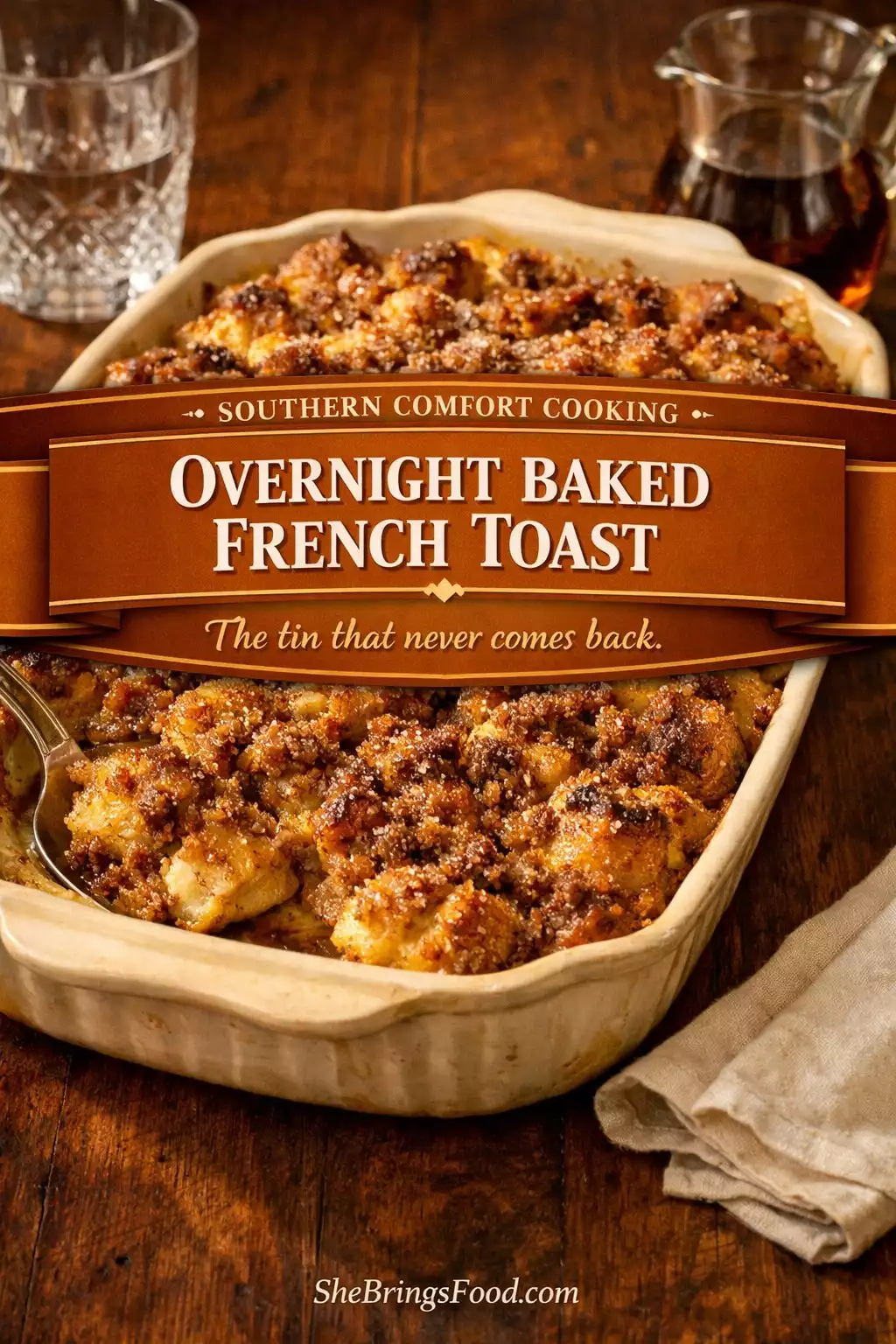
Overnight Baked French Toast
I alternate this with the breakfast casserole for holiday mornings. Sweet household gets this one. It goes together the night before, goes in the oven Christmas morning, and by the time gifts have been opened and everyone has made their way to the kitchen, it’s done and it’s warm and the house smells exactly like a holiday morning should smell. That’s the whole plan, and it works every year.
Assemble tonight, best breakfast tomorrow — that’s overnight baked French toast in its simplest description. Thick brioche or challah soaked in an egg custard, topped with brown sugar and cinnamon, refrigerated overnight and baked the next morning. The bread absorbs the custard completely overnight and becomes something between French toast and bread pudding — custardy, rich, slightly crispy on top, and deeply satisfying in a way that no same-day French toast can replicate.
Baked French toast casserole is the make-ahead breakfast that belongs at every holiday table and every brunch gathering where the cook needs to not be standing at a stove in the morning. Everything happens the night before. Morning involves putting a cold dish in a preheated oven and walking away. The result arrives at the table looking and tasting like significantly more effort than that.
Make this on a Friday night for Saturday guests. Make it on Christmas Eve for Christmas morning. Make it for a Sunday brunch where you want to be at the table rather than at the stove. That’s what overnight French toast casserole is designed for.
Why This Recipe Works
Overnight soaking is the technique that makes this version better than any same-day baked French toast. The bread absorbs the custard completely — all the way through — rather than just on the surface. When baked, the fully-soaked bread produces a texture that’s more similar to bread pudding than traditional French toast, in the best way. The center is custardy and soft, the top is slightly caramelized from the brown sugar, and every bite is uniformly flavored rather than having a well-soaked exterior around a dry interior.
Brioche or challah — enriched, slightly sweet breads with more fat than standard sandwich bread — absorb custard better and produce a richer result. Day-old bread is better than fresh — it’s drier and absorbs more custard rather than breaking down into mush. Easy French toast casserole made with the right bread and enough soaking time produces a breakfast that’s genuinely special without any morning effort.
Ingredients
For the Casserole
- 1 loaf brioche or challah (about 12 oz), cut into 1-inch cubes
- 6 large eggs
- 2 cups whole milk
- ½ cup heavy cream
- ½ cup granulated sugar
- 2 teaspoons vanilla extract
- 1 teaspoon cinnamon
- ¼ teaspoon nutmeg
- Pinch of salt
For the Brown Sugar Topping
- ½ cup packed brown sugar
- 2 tablespoons unsalted butter, cold and cubed
- 1 teaspoon cinnamon
How to Make It
1
1 Prepare the bread (night before)
Cut or tear brioche into rough 1-inch pieces. If the bread is very fresh, spread on a baking sheet and leave out for a few hours or dry in a 250°F oven for 20 minutes. Day-old bread works best. Grease a 9×13 baking dish and fill with bread cubes.
2
2 Make and pour the custard (night before)
Whisk together eggs, milk, cream, sugar, vanilla, cinnamon, nutmeg, and salt until smooth. Pour evenly over the bread cubes. Press the bread down gently so all the pieces are moistened. Cover tightly with plastic wrap and refrigerate overnight (at least 8 hours, up to 12).
3
3 Add topping and bake (morning)
Preheat oven to 350°F. Mix brown sugar, cinnamon, and cold butter pieces with your fingers until crumbly. Scatter over the top of the soaked bread. Bake 45–55 minutes until the center is set (doesn’t jiggle when nudged) and the topping is deeply caramelized. Tent with foil if it’s browning too fast.
4
4 Rest and serve
Let rest 10 minutes before cutting. The custard needs time to settle. Serve with maple syrup, powdered sugar, or fresh fruit. The casserole cuts into clean portions after resting — serve from the dish or plate individually.
Things I’ve Learned From Making This Too Many Times to Count
Use dry or day-old bread. Fresh brioche or challah is too moist and breaks down into a soggy mass overnight. Bread that’s been out for 24 hours, or dried briefly in a low oven, absorbs the custard without dissolving. The bread needs structure to hold up to overnight soaking.
Press the bread down when adding custard. Pour the custard over the bread and press gently to ensure all pieces are submerged or at least moistened. Any pieces that stay dry on top don’t absorb the custard and bake up hard and dry while the rest is custardy. Press, cover, refrigerate.
The center is done when it doesn’t jiggle. Gently nudge the pan at 45 minutes. If the center wobbles like jello, it needs more time. If it barely moves, it’s done. Overbaked French toast casserole is dry. Properly baked is custardy and soft throughout.
Add the topping in the morning, not the night before. Brown sugar topping refrigerated overnight absorbs moisture from the custard and dissolves. Add it cold, straight from the mixing, right before the casserole goes in the oven. The cold butter pieces are what create the caramelized crust.
Let it rest. Fresh out of the oven the custard is still setting. Ten minutes of resting produces clean, hold-together portions. Cut immediately and the portions are loose and messy. Let it rest. I know it smells incredible. Let it rest anyway.
Make it for any holiday morning. This is what I make when Christmas morning needs to feed everyone without anyone cooking in the morning. Zero effort on the day. Full reward at the table. I have made this for births, moves, bad days, and good Sundays. It always lands.
What to Serve With Overnight Baked French Toast
Serve alongside breakfast casserole, cinnamon rolls, and pancakes at a large holiday spread. Individually, it’s a complete breakfast with fruit and coffee. Fresh berries or sliced peaches alongside add color and a fresh contrast to the rich, custardy casserole.
For brunch gatherings, this is the dish that handles itself. Set it out, let people serve themselves, and spend that time with whoever is at your table rather than at your stove. The whole point of this recipe is to let the morning be about something other than cooking.
Variations Worth Trying
With cream cheese swirl: Before refrigerating, dollop small spoonfuls of sweetened cream cheese (4 oz + 2 tbsp sugar + 1 egg) throughout the bread. The cream cheese creates tangy pockets throughout the casserole that contrast beautifully with the sweet custard.
With fresh berries: Scatter 1 cup of fresh blueberries or sliced strawberries over the bread before adding the custard. The berries soften overnight and create jammy pockets in the baked casserole. Beautiful color and added freshness.
With pecan topping: Add ½ cup chopped pecans to the brown sugar topping. The pecans toast during baking and add crunch and nuttiness to the caramelized crust.
Caramel version: Pour a simple caramel sauce over the bread before the custard. After baking, the caramel absorbs into the bread and creates a sticky, deeply sweet base. Both ways work — this kitchen doesn’t judge.
Storage and Reheating
Cover and refrigerate leftover casserole for up to 3 days. Reheat individual portions in the microwave at 70% power for 60–90 seconds, or cover the dish with foil and reheat at 300°F for 20 minutes. Add a small drizzle of maple syrup after reheating to refresh the flavor.
Freeze baked casserole in portions for up to 2 months. Thaw overnight in the refrigerator and reheat as above. The texture changes slightly after freezing but remains very good for a make-ahead breakfast solution.
FAQ
What bread is best for baked French toast?
Brioche or challah are ideal — they’re enriched with eggs and butter, slightly sweet, and have enough structure to hold up overnight. French bread or sourdough work as firmer alternatives with less sweetness. Avoid standard sandwich bread, which gets mushy and loses its texture entirely with overnight soaking.
Can I bake this same-day?
Yes, though the overnight version is better. For same-day, soak the bread at minimum 2 hours before baking — the custard won’t penetrate as fully, so the bread will have a soft exterior and slightly drier interior compared to the overnight version. Still good, but the overnight rest is what makes it exceptional.
How do I know when baked French toast is done?
The center should be set — nudge the pan and it should barely move, not jiggle like liquid. The internal temperature should reach 165°F if you want to test with a thermometer. The top should be deeply golden and the brown sugar topping should be caramelized and slightly crusty. Err on the side of fully baked rather than underdone.

Ana
Ana is a Southern stay-at-home mom of three who bakes the way most people breathe — constantly, naturally, without making a fuss about it. She shows up at new neighbors’ doors with a tin of cookies before the boxes are even unpacked, and she has never once come home from a potluck with anything left in her dish. She Brings Food is where she puts the recipes her family counts on and her neighbors keep asking for.