


Ana
Ana is a Southern stay-at-home mom of three who bakes the way most people breathe — constantly, naturally, without making a fuss about it. She shows up at new neighbors’ doors with a tin of cookies before the boxes are even unpacked, and she has never once come home from a potluck with anything left in her dish. She Brings Food is where she puts the recipes her family counts on and her neighbors keep asking for.




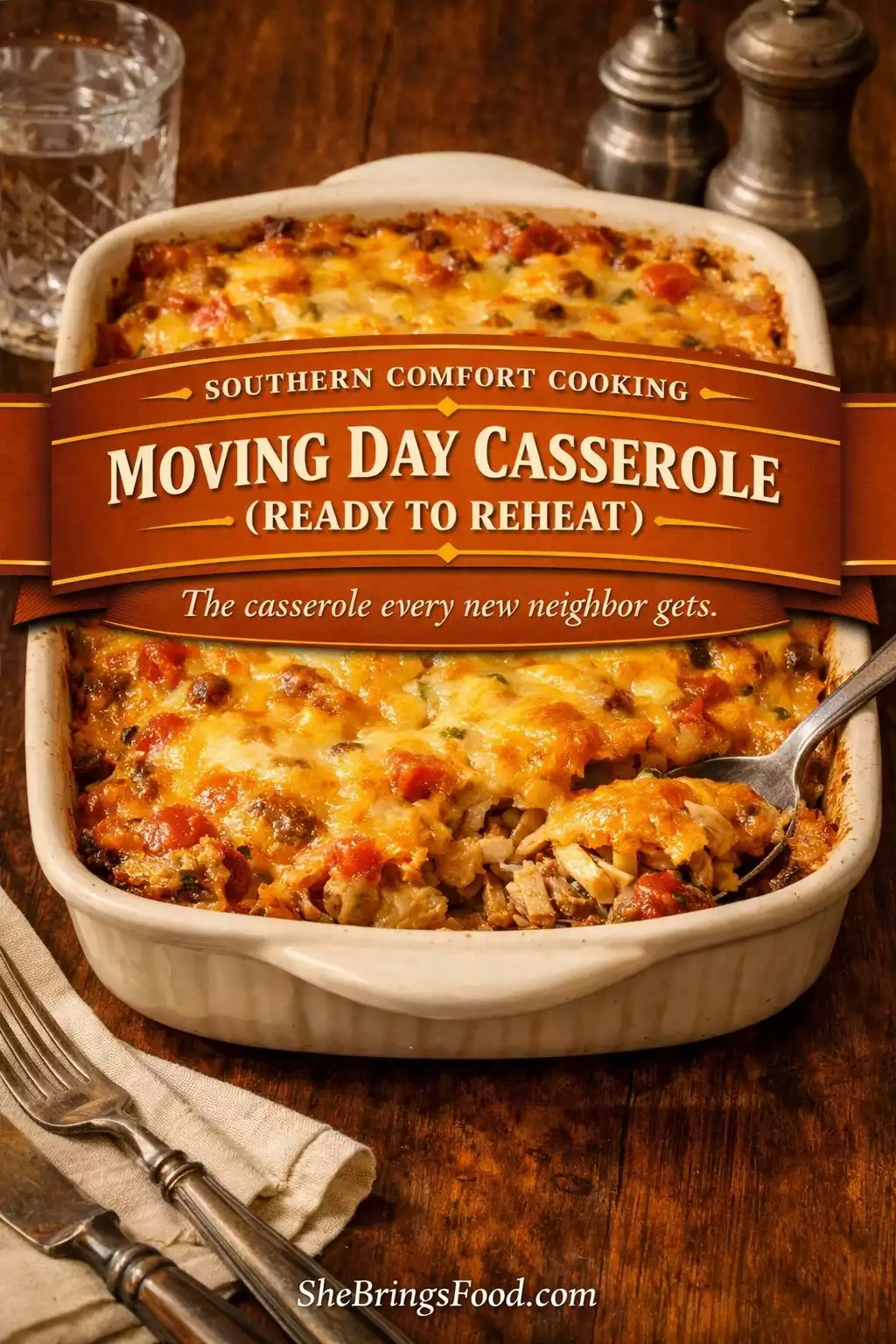
Moving Day Casserole (Ready to Reheat)
Every new family on my block has received this casserole. The disposable pan means they have one less thing to think about on moving day. That’s the whole design. Moving day is already full of logistics. A meal in a throwaway pan with reheating instructions means a family that just moved in can feed themselves that night without finding a casserole dish to return later, without figuring out the new oven, without anything except reading a sticky note. That’s what this recipe is actually doing.
Disposable pan. Sticky note. No dish to return. That’s the moving day casserole philosophy, and it’s why this recipe works as a neighbor gift even better than it works as a dinner. Chicken casserole in a disposable aluminum pan, covered with foil, labeled with reheating instructions on a sticky note. One less thing to think about on a day that has too many things.
Easy casserole for new neighbors doesn’t need to be a complicated recipe — it needs to be the right recipe for the circumstances. Reheatable without quality loss. Something a family of any size can eat without accompaniment. Something that tastes like someone made it with care, even when reheated two hours after you dropped it off. This casserole meets all those criteria.
Make this the next time a moving truck appears on your street. Add the sticky note with your phone number. Knock, hand it over, say welcome. That’s the whole thing. Every new family on this block has gotten one, and I intend to keep the streak going.
Why This Recipe Works
King Ranch-style chicken casserole is the base here — layered tortillas, seasoned chicken, Rotel tomatoes, cream soups, and cheese. It reheats exceptionally well because the cream sauce and cheese protect the interior from drying out. Cover with foil to reheat and uncover for the last five minutes to re-crisp the top. The casserole arrives in the same condition it left your kitchen.
Disposable aluminum pans solve the social complexity of casserole gifting completely. The recipient doesn’t have to wash and return a dish — which creates an obligation in an already complicated time. Disposable means the gift is complete and self-contained. No strings. No logistics. Just a warm meal and a note that says reheat at 350. The casserole for new neighbors works because of the food and because of the container and because of the note. All three together make the gesture complete.
Ingredients
For the Casserole
- 3 cups cooked and shredded chicken (rotisserie chicken works perfectly)
- 1 can (10.5 oz) cream of mushroom soup
- 1 can (10.5 oz) cream of chicken soup
- 1 can (10 oz) Rotel diced tomatoes and chiles, drained
- 1 cup chicken broth
- 1 packet (1 oz) taco seasoning
- 10 flour tortillas, torn into pieces
- 2 cups shredded sharp cheddar, divided
- 1 cup shredded Monterey Jack, divided
- Salt and pepper to taste
For Delivery
- 1 disposable 9×13 aluminum pan with lid
- Sticky note with: reheating instructions (350°F, 30 min covered, 10 min uncovered), your name and phone number
How to Make It
1
1 Make the sauce
In a large bowl, combine both soups, drained Rotel, chicken broth, and taco seasoning. Stir until smooth. This is the sauce that makes everything else work — season it well before assembling the layers.
2
2 Layer the casserole
In a greased 9×13 disposable pan, layer as follows: torn tortillas (single layer), half the chicken, half the sauce, half the cheese. Repeat layers. End with a generous cheese layer on top that will brown beautifully when reheated.
3
3 Bake (or don’t)
For immediate delivery: bake at 350°F for 35–40 minutes until bubbly and golden. The recipient reheats at 350°F, covered, for 20–25 minutes. For unbaked delivery: assemble and deliver unbaked with instructions to bake at 350°F for 45–55 minutes covered, then 10 minutes uncovered. Unbaked gives them flexibility on when to eat it.
4
4 Label and deliver
Cover with the disposable lid or foil. Write the sticky note — include your name, phone number, and clear reheating instructions. Affix the note to the top. Knock on the door. This is the whole step, and it matters as much as the cooking.
Things I’ve Learned From Making This Too Many Times to Count
Rotisserie chicken is the right call. Moving day doesn’t need you to poach chicken from scratch. Buy a rotisserie chicken, shred it, use it. The final casserole doesn’t taste like a shortcut. It tastes like someone made dinner for a family that had a long day. The difference between good and gone-in-ten-minutes is the seasoning and layering, not the chicken provenance.
Disposable pan, always. A casserole dish creates a social obligation — they have to wash it and return it. On moving day, that’s a task nobody needs. Disposable aluminum pans come in 9×13 and cost almost nothing. Use them for any food gifting situation where returning a dish would be a burden.
Write clear reheating instructions. Not everyone is comfortable reheating an unfamiliar casserole without guidance. Temperature, covered or uncovered, approximate time. Four lines on a sticky note. This is not optional. Clear instructions make the gift more usable and more appreciated.
Include your phone number. If they have questions, they should be able to reach you. If they want to get to know you better, this gives them a way. The phone number is a small thing that changes the register of the gift from anonymous to neighborly.
Deliver the day of the move. Timing is the point. A casserole delivered two days after move-in is kind but ordinary. A casserole on moving day itself, before they’ve figured out where the plates are, is exceptional. Same recipe, completely different impact.
Make two and keep one. If you’re already making the sauce and layering a casserole, doing two takes ten extra minutes. Keep one for dinner. Give one away. Both households eat well and you’ve made a new neighbor feel genuinely welcomed. I have made this for births, moves, bad days, and good Sundays — and it always lands.
What to Serve With Moving Day Casserole
The casserole is designed to stand alone as a complete dinner — no sides required. If you want to add something, include a bag of welcome cookies alongside. The combination of a savory dinner casserole and a tin of sweet cookies at the door on moving day is the full She Brings Food welcome. It’s what I bring to every new family on this street, and eleven families have now been greeted this way.
For internal gifting — the casserole for your own table — serve with Southern coleslaw or a simple green salad. Cornbread alongside, or fresh-baked biscuits if the occasion calls for something extra. This is the casserole that feeds a crowd without requiring much thought, and that function applies whether you made it for neighbors or for Tuesday night.
Variations Worth Trying
With corn tortillas: Use corn tortillas instead of flour for a slightly different texture and more authentic Tex-Mex flavor. Corn tortillas hold up a little differently but still layer well.
With green chiles: Add one 4 oz can of diced green chiles to the sauce for extra heat. A good variation for neighbors who you know like a little spice, or for your own family’s table.
Vegetarian version: Replace chicken with black beans and corn, skip the chicken broth for vegetable broth, and use cheese only (no meat). A complete meatless casserole that works well as a neighbor gift for vegetarian families.
Upgraded with homemade cream sauce: Replace the canned soups with a homemade cream sauce — butter, flour, chicken broth, and a splash of cream. The from-scratch version has a cleaner, more complex flavor. Use it your own way.
Storage and Reheating
Baked casserole stores in the refrigerator for up to 4 days. Reheat covered at 350°F for 20–25 minutes, then uncover for 10 minutes. Unbaked assembled casserole refrigerates for 24 hours and freezes for up to 2 months. Bake from frozen covered at 350°F for 60–70 minutes.
For gifting, a baked casserole is easier to deliver — it just needs reheating. An unbaked assembled casserole gives the recipient more flexibility on timing. Both versions include the same sticky note instructions. The note is the last step and the most important one.
FAQ
Should I deliver baked or unbaked?
Both work. Baked: the family can eat it tonight with minimal effort. Unbaked: they can eat it whenever they’re ready, including the next day. If you know they’re arriving late and tired, bake it. If the timing is uncertain, deliver unbaked with clear bake instructions. Either way works — it’s the showing up that matters most.
What if they have food allergies?
If you don’t know yet, include a note listing the main ingredients — chicken, wheat (flour tortillas), cheese, Rotel. This lets them make their own decision about safety without you needing advance information. It’s a respectful approach that covers you both.
How long can the casserole sit at room temperature before delivery?
For food safety, deliver within 2 hours of baking. The casserole stays hot in its covered pan for about an hour after leaving the oven. For longer delivery windows, deliver unbaked — assembled and refrigerated, with instructions to bake upon arrival. This is the safer and more flexible option for uncertain timing.

Ana
Ana is a Southern stay-at-home mom of three who bakes the way most people breathe — constantly, naturally, without making a fuss about it. She shows up at new neighbors’ doors with a tin of cookies before the boxes are even unpacked, and she has never once come home from a potluck with anything left in her dish. She Brings Food is where she puts the recipes her family counts on and her neighbors keep asking for.