

Ana
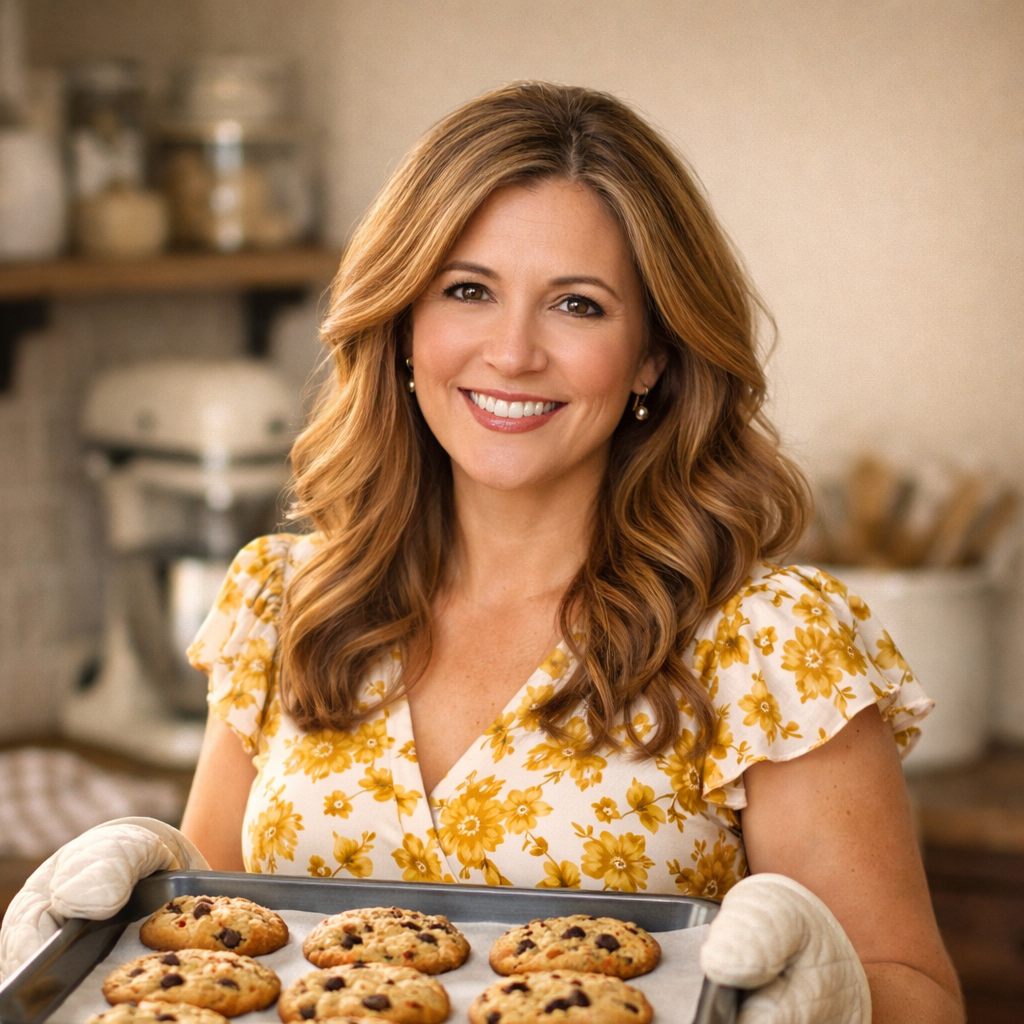
Ana is a Southern stay-at-home mom of three who bakes the way most people breathe — constantly, naturally, without making a fuss about it. She shows up at new neighbors’ doors with a tin of cookies before the boxes are even unpacked, and she has never once come home from a potluck with anything left in her dish. She Brings Food is where she puts the recipes her family counts on and her neighbors keep asking for.




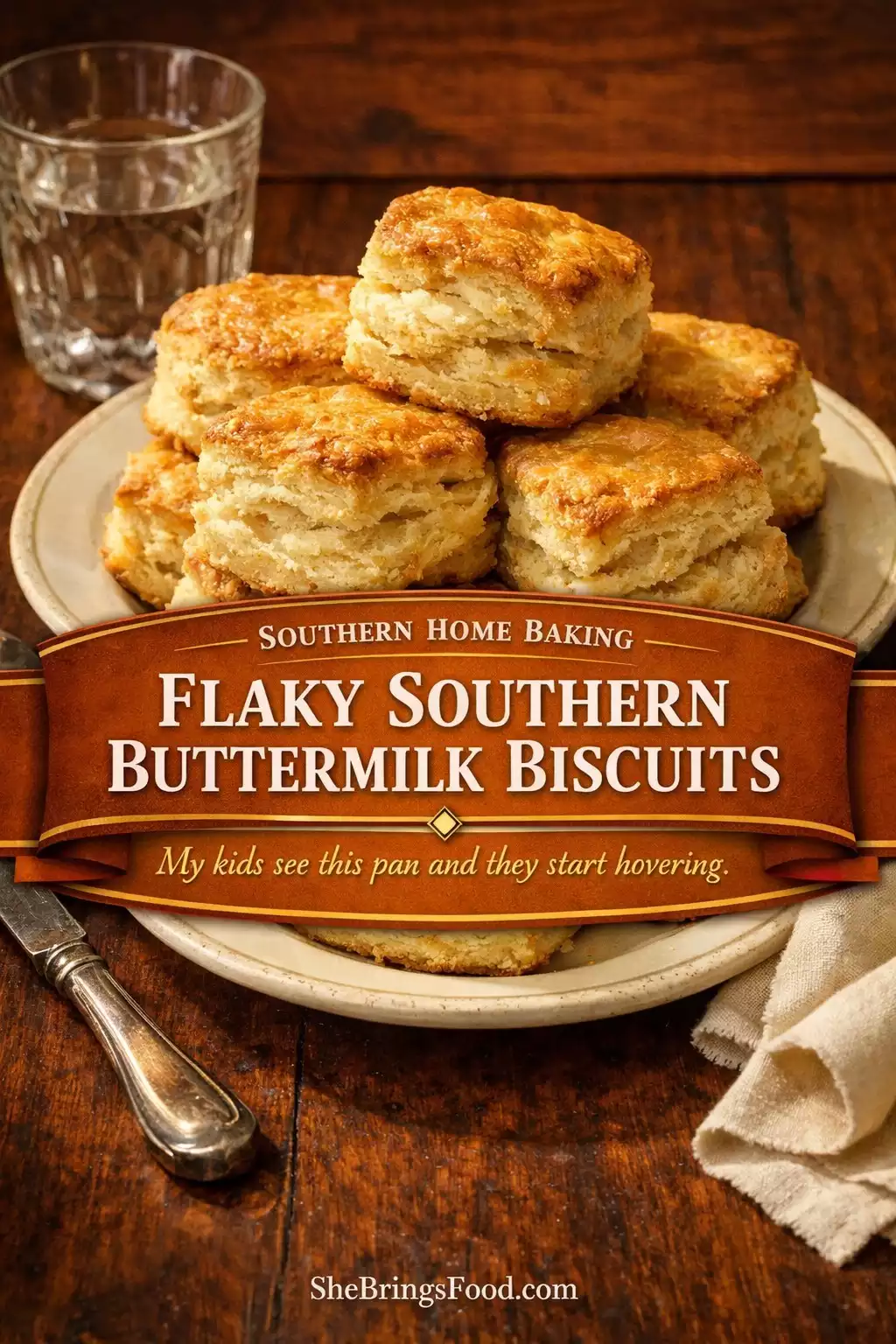
Flaky Southern Buttermilk Biscuits
My grandmother made these without looking at a recipe once in her life. She mixed by feel — cold butter cut in with her hands, buttermilk added until the dough came together right, patted out and cut in two confident strokes. I have made these with a recipe fifty times. Mine are pretty close. I consider that a reasonable outcome.
Tall, flaky, pull-apart, golden — that’s the Southern buttermilk biscuit, and this recipe is how I’ve chased my grandmother’s version for the better part of a decade. The biscuits that my family considers a non-negotiable part of Saturday morning. The ones my kids hover around the oven waiting for. The ones I make with the easy biscuit recipe I’ve committed to memory at this point, because making them has become second nature.
Southern buttermilk biscuits are one of those recipes where technique matters more than anything. The ingredients are simple: cold butter, flour, buttermilk, salt, baking powder. What you do with them is what determines whether you get something tall and flaky that pulls apart in layers or something flat and dense that tastes like effort. The technique here produces the flaky version, reliably, every time you make it.
Make these once a week for a month and you’ll have them memorized. At that point, you’re making them the way my grandmother did — without looking, by feel, knowing exactly when the dough is right. That’s the destination, and this recipe is how you get there.
Why This Recipe Works
Cold butter is the reason biscuits are flaky. When cold butter pieces are distributed through flour and the dough hits the oven, the butter melts and creates steam, which pushes the layers apart. Warm butter blends into the flour and the steam never forms. The layers never happen. Cold butter. This is not the place to improvise.
Buttermilk does two things: it provides the acidity that activates the baking soda (when combined with baking powder) for better lift, and it creates a slightly tangy flavor that plain milk can’t replicate. Full-fat buttermilk produces a richer, more tender biscuit than low-fat. The combination of cold butter and real buttermilk in the right ratio is what makes homemade biscuits rise tall and taste like they came from a kitchen where someone knows what they’re doing.
Ingredients
For the Biscuits
- 2 cups all-purpose flour (plus more for dusting)
- 1 tablespoon baking powder
- ½ teaspoon baking soda
- 1 teaspoon salt
- 1 teaspoon sugar
- ½ cup (1 stick) cold unsalted butter, cut into small cubes
- ¾ cup cold full-fat buttermilk
- 2 tablespoons melted butter for brushing
How to Make It
1
1 Mix the dry ingredients and cut in butter
Whisk together flour, baking powder, baking soda, salt, and sugar. Add cold cubed butter and work it in with your fingers or a pastry cutter until the mixture resembles coarse crumbs with some pea-sized butter pieces still visible. Work quickly — warm hands melt butter. Cold butter pieces are what you’re after.
2
2 Add buttermilk
Pour cold buttermilk over the flour mixture and stir with a fork just until the dough comes together. It should look shaggy and a little rough. Overworking makes tough biscuits. Stop the moment the dough holds together — a few dry patches are fine.
3
3 Fold, pat, and cut
Turn dough onto a lightly floured surface. Pat it into a rectangle about ¾ inch thick. Fold in thirds like a letter, pat down again. Repeat once more. This folding creates layers. Cut biscuits straight down with a round cutter — don’t twist. Press straight down and lift straight up. Twisting seals the edges and they won’t rise as high.
4
4 Bake high and hot
Preheat oven to 450°F. Place biscuits touching on a parchment-lined baking sheet — biscuits touching each other rise up instead of out. Brush tops with melted butter. Bake 12–14 minutes until deeply golden. Brush again with butter as soon as they come out. Let cool two minutes before serving, if you can.
Things I’ve Learned From Making This Too Many Times to Count
Cold butter. Every time. Cut the butter and put it in the freezer for ten minutes before using. This is not optional. Cold butter makes flaky biscuits. Soft butter makes flat biscuits. Cold butter. This is not the place to improvise.
Don’t overwork the dough. Overworked biscuit dough develops too much gluten and produces tough, dense biscuits. Mix until the dough just barely holds together, fold a few times for layers, and stop. The dough should look rough. That’s correct.
Fold for layers. The fold-and-pat method is what creates the distinctive flaky layers in a Southern biscuit. One fold gives you layers. Two folds give you more. The folding also helps strengthen the dough just enough for the biscuits to rise without spreading.
Cut straight down, no twisting. Twisting the biscuit cutter seals the cut edges, preventing the biscuits from rising as high. Press the cutter straight down, lift straight up, and you’ll get tall, open-sided biscuits that pull apart in layers. That’s the whole difference.
Bake them touching. Biscuits placed touching each other on the pan rise up instead of spreading out. They support each other and come out taller. Leave space and they spread low and flat. Touching is correct.
High heat, short time. 450°F is correct for Southern biscuits. Lower heat gives you a longer bake that dries them out before they’re golden. High and fast is the right approach — 12–14 minutes and done.
What to Serve With Flaky Southern Buttermilk Biscuits
These are the biscuit for country gravy, honey butter, or any biscuits and gravy situation. They belong alongside honey butter drop biscuits on a full breakfast spread. Serve with sausage gravy, fried eggs, and sliced tomatoes for the kind of Saturday morning that the rest of the week works toward.
These biscuits also go with soup, especially chili and tomato soup. They work as the base for strawberry shortcake. Split and toasted the next morning with jam. There is almost no meal where a good biscuit doesn’t improve the situation, and these are a very good biscuit.
Variations Worth Trying
Cheddar biscuits: Add 1 cup shredded sharp cheddar and ¼ teaspoon garlic powder to the flour mixture before adding the butter. The cheese adds richness and flavor — excellent alongside soups, chilis, or as a standalone snack.
Herb biscuits: Add 2 tablespoons finely chopped fresh chives, rosemary, or thyme to the dry ingredients. Herbed biscuits are excellent with roasted chicken or served alongside any savory main dish.
Honey biscuits: Add 2 tablespoons honey to the buttermilk before mixing. Slightly sweeter, golden biscuits that are particularly good with butter and extra honey. A natural morning biscuit.
Drop biscuits: Add an extra 2 tablespoons of buttermilk to make the dough wetter, then drop by spoonfuls onto the pan. No patting, no cutting — ten minutes to the pan. Use what you’ve got — this recipe forgives.
Storage and Reheating
Store baked biscuits in an airtight container at room temperature for up to 2 days. Reheat in a 350°F oven for 5–6 minutes, or wrapped in a damp paper towel in the microwave for 20–30 seconds. Split and toast in a toaster oven for an excellent next-day biscuit.
Freeze unbaked biscuits: cut and freeze on a sheet pan until solid, then transfer to a bag. Bake from frozen at 450°F, adding 4–5 minutes to the bake time. Fresh biscuits from frozen whenever you need them.
FAQ
Why are my biscuits not rising?
The most common causes: butter was too warm (it shouldn’t melt into the flour), dough was overworked (developing too much gluten), or baking powder is old (test by dropping a teaspoon in hot water — it should bubble vigorously). Check all three if your biscuits come out flat.
Can I make biscuits without buttermilk?
Yes — add 1 tablespoon of white vinegar or lemon juice to ¾ cup whole milk, stir, and let sit 5 minutes. This creates a reasonable buttermilk substitute. Real buttermilk produces a better biscuit, but this works when you don’t have it on hand.
Can I make biscuit dough ahead of time?
Cut biscuits can be refrigerated unbaked for up to 4 hours. Or freeze as described above. The dough itself doesn’t hold well uncut for extended periods — the leavening begins working as soon as the buttermilk hits the dry ingredients. Cut and refrigerate or freeze for best results.

Ana
Ana is a Southern stay-at-home mom of three who bakes the way most people breathe — constantly, naturally, without making a fuss about it. She shows up at new neighbors’ doors with a tin of cookies before the boxes are even unpacked, and she has never once come home from a potluck with anything left in her dish. She Brings Food is where she puts the recipes her family counts on and her neighbors keep asking for.