


Ana
Ana is a Southern stay-at-home mom of three who bakes the way most people breathe — constantly, naturally, without making a fuss about it. She shows up at new neighbors’ doors with a tin of cookies before the boxes are even unpacked, and she has never once come home from a potluck with anything left in her dish. She Brings Food is where she puts the recipes her family counts on and her neighbors keep asking for.




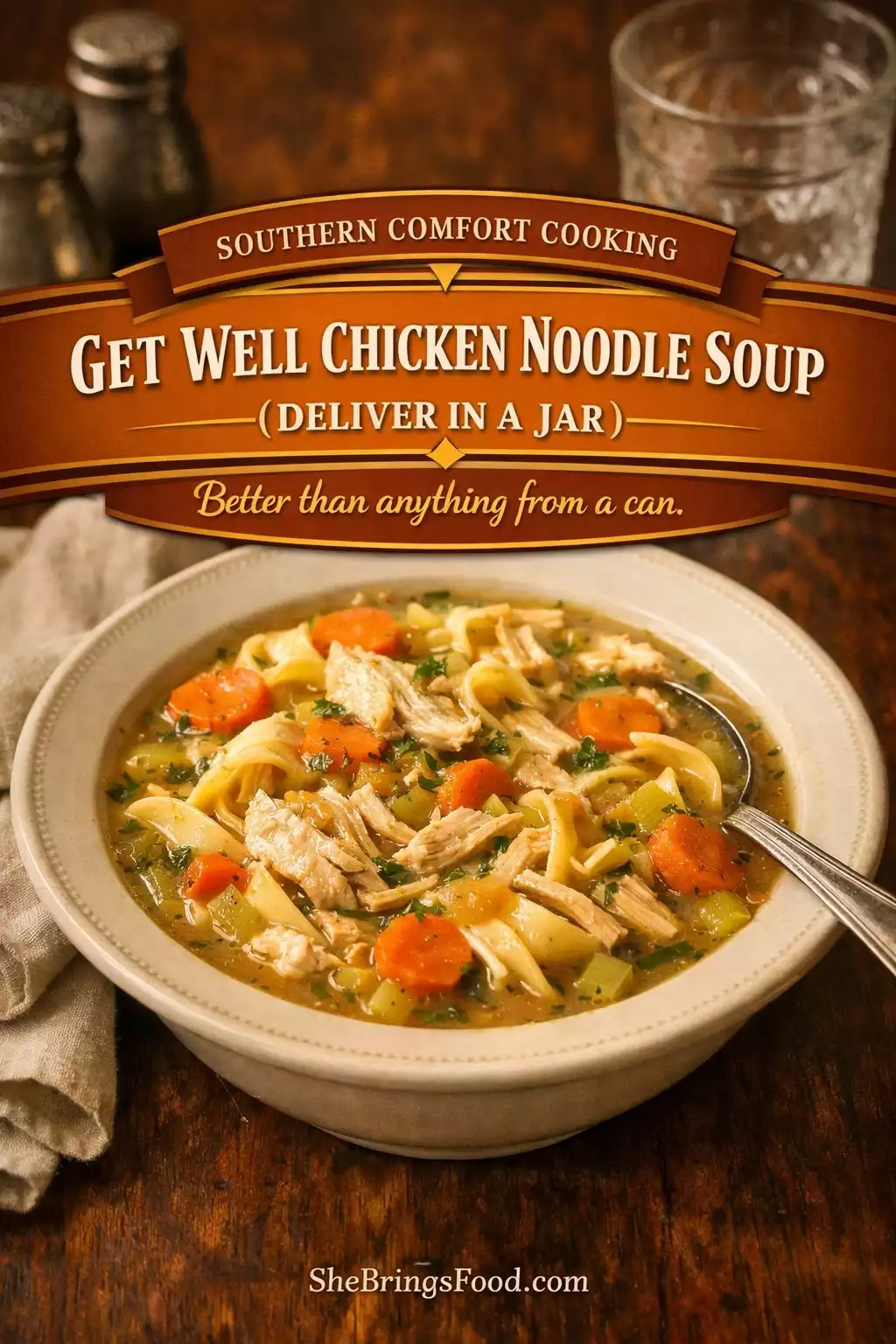
Get Well Chicken Noodle Soup (Deliver in a Jar)
When I hear someone on the block is sick, I make this. It takes half an hour. I leave it on the porch. I always get a text back.
This is the get well chicken noodle soup that actually helps. Not because it has anything unusual in it — it doesn’t — but because it arrives on someone’s porch in a wide-mouth mason jar with a note, within hours of you hearing the news. The speed is the gift. The soup is the vehicle.
There is a reason chicken noodle soup recipe has been the sick-neighbor standard for a hundred years. It works on a cellular level. The hot broth, the soft vegetables, the gentle noodles — none of it asks anything of a body that’s already working hard. It just helps. And when it arrives on your porch with someone’s handwriting on a sticky note, it also does something the medicine doesn’t: it says you were thought of.
Every time. Thirty minutes. Porch drop. Always gets a text back. That is the whole system.
Why This Recipe Works
The best easy chicken noodle soup for delivery has four non-negotiables: it’s quick to make, it travels well, it reheats without falling apart, and it’s genuinely good. Not “comforting” in a vague abstract sense — actually delicious, well-seasoned, worth eating when you don’t feel like eating anything.
Egg noodles cooked separately and stored alongside the soup (not in it) means the noodles stay intact through refrigeration and reheat. Noodles stored in broth turn soft and gummy within hours. Jar the broth with chicken and vegetables; bag the cooked, cooled noodles in a small zip bag tucked into the delivery bag alongside the jar. Label both. The recipient adds noodles when they reheat. Two extra steps for them; structurally superior results.
The broth here is lightly seasoned — thyme, parsley, garlic — familiar and undemanding. A sick person should not have to think about the food. They should just eat it.
Ingredients
Soup
- 1½ lbs boneless, skinless chicken thighs or breasts
- 2 tbsp butter or olive oil
- 1 medium yellow onion, diced
- 3 medium carrots, sliced into thin rounds
- 3 stalks celery, sliced
- 4 cloves garlic, minced
- 6 cups low-sodium chicken broth
- 1 tsp dried thyme
- 1 tsp dried parsley
- ½ tsp garlic powder
- Salt and black pepper to taste
Noodles (Stored Separately)
- 2 cups wide egg noodles
- Pinch of salt for cooking water
- 1 tsp olive oil (to prevent sticking after cooking)
For Delivery
- 1 wide-mouth quart mason jar
- 1 small zip bag for noodles
- Sticky note or note card
- Insulated bag if delivering hot
How to Make It
1
1Cook the chicken
Place chicken in the broth in a large pot. Bring to a simmer over medium heat and cook for 20–25 minutes until cooked through. Remove chicken to a cutting board and shred with two forks. Return shredded chicken to the pot. Alternatively, use a rotisserie chicken — shred directly, skip this step, add to the broth. For a thirty-minute soup on short notice, rotisserie is a completely legitimate call.
2
2Sauté the vegetables
In a separate skillet or in the same pot before adding broth, melt butter over medium heat. Cook onion, carrots, and celery for 5–7 minutes until softened. Add garlic and cook 1 minute more. If using the same pot, remove chicken first, sauté vegetables, then return chicken and broth.
3
3Combine and season
Add all vegetables to the broth with shredded chicken. Add thyme, parsley, and garlic powder. Simmer together for 10 minutes to let the flavors come together. Taste — this is where you adjust. Salt generously. Underseasoned chicken soup is a missed opportunity. Taste it before you’re done. That’s just good Southern sense.
4
4Cook noodles separately
Bring a pot of salted water to a boil. Cook egg noodles according to package directions until just al dente — slightly underdone is right, because they’ll finish cooking in the hot soup at reheat. Drain, toss with a touch of olive oil to prevent sticking, and cool completely. Store in a small zip bag.
5
5Jar and deliver
Cool soup slightly — 15–20 minutes off heat. Ladle into a wide-mouth quart mason jar, leaving 1 inch of headspace. Seal. Tuck the bag of noodles into the delivery bag alongside the jar. Write the note: “Pour soup into pot over medium heat. Add noodles from the bag. Heat 10 minutes. Salt to taste.” Leave on porch. Walk back to your car.
Things I’ve Learned From Making This Too Many Times to Count
Always separate the noodles. I wouldn’t have figured this out if my neighbor hadn’t told me — she was a restaurant cook for fifteen years before she had kids. Noodles in the soup turn to mush in the jar. Noodles in a bag, added at reheat, stay perfect. Do not skip this step.
Rotisserie chicken is not a shortcut. It’s a strategy. When someone on the street is sick and I hear about it at 4:30 in the afternoon, I need soup on their porch by 6. Rotisserie chicken in the broth with sautéed vegetables gets me there. The soup tastes just as good. The care is identical.
Write specific reheating instructions. Not “heat until warm.” How long, what heat, what to add. A sick person standing at a stove doesn’t want to make decisions. Remove the decisions.
Don’t ring the doorbell. A soft knock or no knock. Leave it in a bag with an ice pack if it’s warm outside. The person inside is sick. They don’t need to answer the door with their hair matted from fever. Leave it and go.
Text when you leave it. Not “can I bring you soup?” Just: “Soup is on your porch. Note is on the jar. Feel better.” Done.
What to Serve With Get Well Chicken Noodle Soup
The jar is the complete meal. If you want to add something, a sleeve of simple crackers tucked in the bag alongside is the right move. Nothing that requires preparation, nothing that expires fast, nothing that needs to be refrigerated.
For a more comprehensive delivery, pair with the new baby meal train soup format (both jar-based, both reheat-ready) or add one of the tomato soup jars for variety if someone is home sick for several days. Two jars in a bag is two days of meals. That’s the kind of planning that gets remembered.
Variations Worth Trying
Rice instead of noodles. Swap egg noodles for cooked white rice — same separate-storage principle. Spoon rice into the soup at reheat. Slightly gentler on a sick stomach than egg noodles, if that matters for the recipient.
Lemon brightened version. Add 2 tablespoons of fresh lemon juice at the very end of cooking. Brightens the whole soup noticeably and adds a slight vitamin-forward flavor that feels appropriate for illness. Both ways work. This kitchen doesn’t judge.
Add spinach. Handful of fresh baby spinach stirred in at the end wilts immediately and adds iron and color. Not detectable by picky eaters. Good addition for a household with kids who are sick.
Freeze ahead. Make a double batch. Jar and freeze half in wide-mouth mason jars with extra headspace. When you hear someone is sick, you already have soup ready to deliver. The preparation is the whole point of keeping a well-stocked freezer.
Storage and Reheating
Sealed mason jar refrigerates for up to 4 days. Noodles stored separately in a zip bag keep refrigerated for up to 3 days. To reheat: pour soup into a pot over medium-low heat for 10–12 minutes, stirring occasionally. Add noodles from the bag in the last 3 minutes of reheating. Add a splash of broth or water if the soup has thickened.
Soup (without noodles) freezes for up to 3 months in wide-mouth mason jars with 1½ inches of headspace. Thaw overnight in the refrigerator. Cook fresh noodles for serving.
FAQ
Can I deliver this soup hot?
Yes — use a wide-mouth thermal jar or a regular mason jar in an insulated bag. Write the note accordingly: “Soup is hot. Noodles are in the bag. Reheat if needed after a few hours.” Hot delivery works best within 30–45 minutes of making it.
What if I don’t have mason jars?
Any container with a tight-sealing lid works. Plastic deli containers, a lidded pot, a zip bag inside a paper bag. The mason jar is the preferred vessel but the soup is what matters. Don’t let a missing jar stop you from making the delivery.
Can I add more vegetables?
Diced Yukon Gold potato, small-diced turnip, or a handful of frozen peas all work well. Add dense vegetables early so they cook through; add peas in the last 5 minutes. Keep the broth-to-solid ratio visible — too many vegetables and it becomes a stew, which changes the reheating experience.
Related: new baby meal train soup | chicken and dumplings | tomato soup

Ana
Ana is a Southern stay-at-home mom of three who bakes the way most people breathe — constantly, naturally, without making a fuss about it. She shows up at new neighbors’ doors with a tin of cookies before the boxes are even unpacked, and she has never once come home from a potluck with anything left in her dish. She Brings Food is where she puts the recipes her family counts on and her neighbors keep asking for.