


Ana
Ana is a Southern stay-at-home mom of three who bakes the way most people breathe — constantly, naturally, without making a fuss about it. She shows up at new neighbors’ doors with a tin of cookies before the boxes are even unpacked, and she has never once come home from a potluck with anything left in her dish. She Brings Food is where she puts the recipes her family counts on and her neighbors keep asking for.




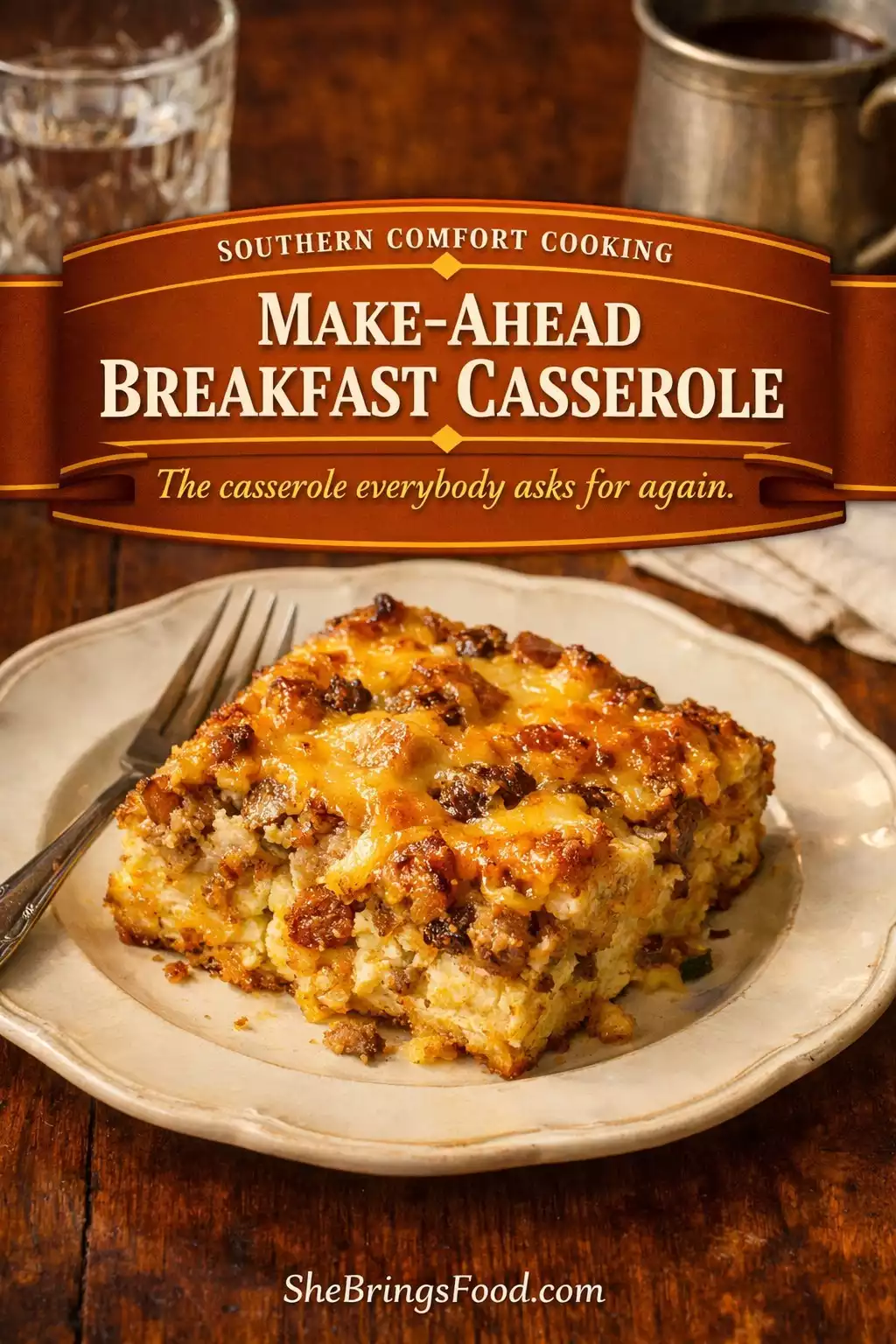
Make-Ahead Breakfast Casserole
I put this together Christmas Eve after the kids are in bed. Christmas morning it goes in the oven while we open presents. By the time everyone has made their way to the kitchen and the coffee is poured, it’s done, it’s hot, and nobody had to cook on Christmas morning. That’s the gift this casserole gives every year, and it’s not a small one.
Make it tonight, feed everyone tomorrow — that’s the promise of the make-ahead breakfast casserole, and it delivers completely. Eggs, sausage, cheese, and cubed bread assembled the night before in a 9×13 pan, refrigerated, and baked the next morning in an oven that requires no supervision. For eight consecutive Christmas mornings, this is the dish that made the morning possible without anyone standing at a stove when they should have been somewhere else.
Easy breakfast casserole is the category of recipe, but what I mean specifically is a custard-soaked bread casserole that functions exactly like overnight French toast but in a savory direction. The bread absorbs the egg and milk mixture overnight. The sausage and cheese distribute through every bite. The next morning it bakes into something custardy and savory and golden on top, and it feeds eight people without anyone having to make decisions before coffee.
Make this the night before any morning that involves feeding more than four people. Holiday mornings, houseguests, any occasion that requires a kitchen producing breakfast for a crowd. This is the recipe that makes those mornings work.
Why This Recipe Works
Overnight soaking is the technique. Cubed bread left in an egg and milk custard for 8–12 hours absorbs the mixture completely. When baked, the fully-soaked bread produces a custardy, uniform texture throughout rather than a wet exterior around a dry center. The bread becomes the vehicle for the egg custard rather than just coexisting with it.
Day-old bread is better than fresh. Fresh bread is too moist and can become mushy during overnight soaking. Slightly stale bread has a firmer structure that absorbs the custard without breaking down. If your bread is fresh, cube it and leave it out for a few hours to dry slightly before assembling. The egg-to-milk ratio is what controls the final texture — more eggs produce a firmer, more quiche-like result; more milk produces something looser and more pudding-like. This recipe sits in the right middle ground for something that scoops cleanly and holds its shape on a plate.
Ingredients
For the Casserole
- 1 lb ground breakfast sausage, cooked and crumbled
- 8 large eggs
- 2½ cups whole milk
- ½ teaspoon salt
- ½ teaspoon black pepper
- 1 teaspoon dry mustard
- ½ teaspoon garlic powder
- 6 cups cubed bread, day-old (French bread, brioche, or sourdough)
- 2 cups shredded sharp cheddar, divided
- ¼ cup green onion, sliced (optional)
How to Make It
1
1 Cook the sausage (night before)
Brown sausage in a skillet over medium heat, breaking into small pieces. Drain fat. Let cool. Crumbled, cooled sausage is what you want in the casserole — hot sausage added to the egg mixture will begin cooking the eggs prematurely.
2
2 Assemble (night before)
Grease a 9×13 baking dish. Spread bread cubes in an even layer. Scatter sausage and 1½ cups of the cheddar over the bread. Whisk together eggs, milk, salt, pepper, dry mustard, and garlic powder. Pour evenly over the bread. Press gently to ensure all bread is moistened. Top with remaining ½ cup cheese. Cover and refrigerate overnight (8–12 hours).
3
3 Bake (morning)
Remove from refrigerator 30 minutes before baking. Preheat oven to 350°F. Bake uncovered 45–55 minutes until the center is set (doesn’t jiggle) and the top is golden. If the top is browning too fast, tent with foil. Let rest 5–10 minutes before cutting.
Things I’ve Learned From Making This Too Many Times to Count
Day-old bread makes a better casserole. Fresh bread breaks down into mush during overnight soaking. Bread that’s a day or two old has enough structure to hold up. If you only have fresh bread, cube it and leave it out for several hours, or dry it briefly in a low oven. This is the thing I had to learn the hard way.
Remove from the refrigerator 30 minutes before baking. Cold casserole straight from the refrigerator bakes unevenly and takes longer. The center may still be cold when the edges are done. Thirty minutes at room temperature evens out the baking and produces more consistent results.
Dry mustard is doing important work. It sounds minor but dry mustard in an egg casserole adds a background savory depth that makes everything taste more complex without tasting like mustard. Don’t skip it. The difference is subtle but noticeable when it’s missing.
The center is done when it doesn’t jiggle. Gently nudge the pan at 45 minutes. A jiggly center needs more time. A set, slightly puffed center is done. Overcooking produces a dry, rubbery casserole. Check early and watch it carefully in the last 10 minutes.
Make two and give one away. This recipe doubles easily. Make one for Christmas morning. Make one for the new family down the street who just moved in. Or the neighbor with the new baby. Bring it in a disposable pan with reheating instructions. It is the correct gift for any morning that’s complicated. I have made this for births, moves, bad days, and good Sundays. It always lands.
Customize the fillings freely. Sausage is the classic, but bacon, ham, or mixed vegetables all work perfectly with the same egg and bread base. Use it your own way — this recipe has manners, it won’t fuss.
What to Serve With Make-Ahead Breakfast Casserole
Serve alongside banana muffins, buttermilk biscuits, and cinnamon rolls as part of a full holiday morning spread. A simple green salad alongside makes this the kind of brunch you could serve to guests without apology. Fresh fruit or a fruit salad on the side completes the table.
For Christmas morning specifically, this casserole in the oven while gifts are being opened is a ritual that my family has come to count on. Nothing cooking during that time. One dish, one oven, one morning that runs exactly as it should.
Variations Worth Trying
With vegetables: Substitute some or all of the sausage with sauteed mushrooms, spinach, peppers, and onion for a vegetarian version. Season the vegetables well and let them cool before adding. Excellent for households with mixed dietary preferences.
With ham and Swiss: Use diced ham instead of sausage and Gruyère or Swiss cheese instead of cheddar. A more elegant, slightly less hearty version that works particularly well for brunch with guests rather than holiday mornings.
With hash browns: Layer frozen hash browns (thawed) at the bottom of the dish before the bread for an extra layer of substance. The hash browns add texture and heartiness that makes each portion even more filling.
With green chiles: Add one 4-oz can of diced green chiles to the egg mixture. Southwestern-style breakfast casserole with a mild heat that pairs well with sharp cheddar and sausage. Top with salsa and sour cream when serving.
Storage and Reheating
Cover and refrigerate leftover casserole for up to 4 days. Reheat individual portions in the microwave at 70% power for 60–90 seconds. Reheat a larger portion covered with foil at 300°F for 20–25 minutes. The casserole reheats very well and tastes very close to fresh-baked.
Freeze baked casserole in portions for up to 2 months. Thaw overnight in the refrigerator and reheat as above. Excellent for meal prep situations where a high-protein breakfast is needed throughout the week without morning cooking effort.
FAQ
Can I bake this without refrigerating overnight?
Yes — assemble and let sit at room temperature for at least 1 hour before baking. The bread won’t be as fully soaked as overnight, so the texture will be slightly less custardy throughout. Still very good, just different. If you can manage overnight, the result is noticeably better.
What bread is best for breakfast casserole?
French bread, brioche, sourdough, or Italian bread all work well. Avoid standard sandwich bread, which becomes too soft and loses its structure. The bread should have enough body to hold up to overnight soaking while still absorbing the custard. Day-old bread of any of these varieties works best.
How do I know the casserole is fully cooked?
The center should be set and not jiggle when nudged. The internal temperature should reach 165°F. The top should be golden and slightly puffed at the edges. A toothpick inserted in the center should come out without wet egg mixture. All four indicators together mean it’s done.

Ana
Ana is a Southern stay-at-home mom of three who bakes the way most people breathe — constantly, naturally, without making a fuss about it. She shows up at new neighbors’ doors with a tin of cookies before the boxes are even unpacked, and she has never once come home from a potluck with anything left in her dish. She Brings Food is where she puts the recipes her family counts on and her neighbors keep asking for.