
Ana
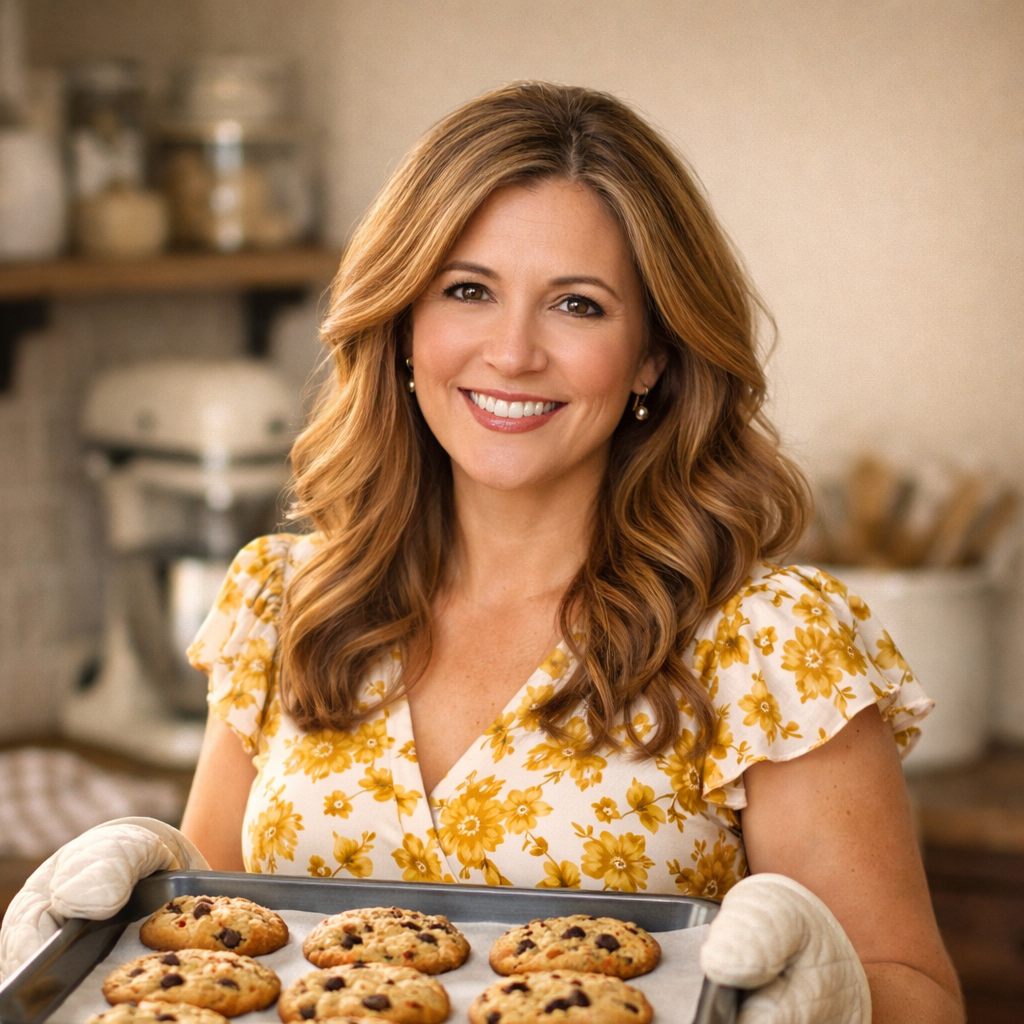
Ana is a Southern stay-at-home mom of three who bakes the way most people breathe — constantly, naturally, without making a fuss about it. She shows up at new neighbors’ doors with a tin of cookies before the boxes are even unpacked, and she has never once come home from a potluck with anything left in her dish. She Brings Food is where she puts the recipes her family counts on and her neighbors keep asking for.

Fluffy Southern Buttermilk Pancakes
My family has had these every Saturday morning for six years. I have never once heard a complaint. Not a single “I’m not hungry” or “can we have something else.” Six years, zero complaints, consistent enthusiasm. This is my most reliable success in this kitchen, and I am not modest about it.
Tall, fluffy, the reason Saturday mornings exist — that’s what these buttermilk pancakes are. Thick enough to hold maple syrup in the wells, crispy at the edges, pillowy in the center, with the slight tang that only real buttermilk gives. These are not the pancakes from a box. These are the fluffy pancakes that my family would be sincerely disappointed not to have on Saturday and has proven that over six consecutive years of consistent attendance at the kitchen table.
Southern buttermilk pancakes are one of those recipes that seems like it should be complicated and turns out to be the opposite. A bowl, a whisk, fifteen minutes. The secret is not adding anything special — it’s leaving the batter a little lumpy and not pressing down on the pancakes while they cook. That’s it. Those two things are what separate a good pancake from a flat, dense one.
Make these the first Saturday you have a free morning and serve them to anyone who happens to be at the table. The recipe will earn its permanent spot in your rotation within one attempt. Six years of Saturdays taught me that, and it’s been exactly that reliable.
Why This Recipe Works
Buttermilk does two things for pancakes. The acid reacts with baking soda to produce bubbles that make the batter lighter and fluffier than any non-acidic batter can manage. And the tang of the buttermilk adds flavor depth that plain milk pancakes don’t have — a slightly sour, complex note that makes the pancake taste like something made with intention. Real buttermilk pancakes are a different product than standard milk pancakes. The difference is noticeable and significant.
Lumpy batter is correct batter. Over-stirred pancake batter develops gluten and produces flat, slightly tough pancakes that don’t rise into the fluffy thickness this recipe is designed for. Stop stirring the moment the dry ingredients disappear — visible lumps are fine. They bake out. Lumpy batter plus a hot griddle is the equation for the homemade pancakes that my family has been requesting every weekend for half a decade.
Ingredients
For the Pancakes
- 2 cups all-purpose flour
- 2 tablespoons sugar
- 2 teaspoons baking powder
- 1 teaspoon baking soda
- ½ teaspoon salt
- 2 cups full-fat buttermilk
- 2 large eggs
- 2 tablespoons unsalted butter, melted
- 1 teaspoon vanilla extract
How to Make It
1
1 Mix dry and wet separately
Whisk together flour, sugar, baking powder, baking soda, and salt in a large bowl. In a separate bowl, whisk together buttermilk, eggs, melted butter, and vanilla. Keep the two separate until ready to cook.
2
2 Combine just before cooking
Pour the wet ingredients into the dry. Stir with a fork or spatula just until combined — the batter should be lumpy. Don’t overmix. Some visible dry spots are fine. Stop stirring and let the batter rest 5 minutes while the griddle heats up. The rest allows the leavening to activate and the batter to thicken slightly.
3
3 Cook on a hot griddle
Heat a griddle or large skillet over medium heat. Add a small pat of butter and let it foam and subside. Pour ¼ cup batter per pancake. When bubbles form across the surface and the edges look set, flip once. Cook 1–2 minutes on the second side until golden. Don’t press down. Don’t flip more than once.
4
4 Serve immediately or keep warm
Serve pancakes directly from the griddle for the crispest edges. To keep warm for a group, place on a baking sheet in a 200°F oven in a single layer — not stacked, which traps steam and softens the edges.
Things I’ve Learned From Making This Too Many Times to Count
Stop stirring. Lumpy batter is not a problem to fix. It is the correct state for pancake batter. Every additional stir after the flour disappears flattens the pancakes by developing gluten and knocking out the air the leavening just created. Stop. Walk away. The batter is done.
Don’t press the pancakes. Pressing a pancake flat with the spatula squeezes out the air bubbles that are responsible for fluffiness. Let the pancake do what it’s going to do. Don’t press it. Don’t touch it after flipping. Leave it alone. Y’all, this is where most people go wrong.
Flip only once. Multiple flips make pancakes tough. One flip, cooked on both sides, done. When bubbles form and the edges look set, flip. When the bottom looks golden, remove. Two times total touching the pancake. That’s the rule.
Hot enough griddle, buttered right. Too cool and the pancakes spread thin before setting. Too hot and they burn before the inside cooks. Medium heat, butter added before each batch. The butter should foam and stop foaming before the batter goes in. That foam going quiet is the signal the temperature is right.
Real buttermilk only. Milk with lemon juice is a functional substitute in many recipes. In buttermilk pancakes, where the buttermilk is a primary flavor contributor, the substitute produces noticeably different results. Real buttermilk is worth seeking out. My family has had these every Saturday for six years. The buttermilk is part of why.
The batter gets thicker as it sits. The first few pancakes from fresh batter cook differently than the last few from batter that’s been sitting. Add a tablespoon of buttermilk if the batter thickens too much as you go through the batch.
What to Serve With Fluffy Southern Buttermilk Pancakes
Serve alongside honey butter biscuits, cinnamon rolls, and waffles for a full Saturday morning spread when the occasion calls for it. Individually, a stack of these with real maple syrup and a slab of butter is a complete meal and a complete morning ritual that my family has been counting on for six years and counting.
Toppings beyond butter and syrup: fresh blueberries, sliced strawberries, banana slices, chopped pecans, whipped cream, chocolate chips folded into the batter before cooking. The pancake is the platform — put whatever belongs on it for your Saturday table.
Variations Worth Trying
Blueberry pancakes: Fold ¼ cup fresh or frozen blueberries into the batter just before cooking, or sprinkle them onto the wet batter after pouring it onto the griddle. The berries burst as they cook and create pockets of sweet-tart flavor throughout.
Banana pancakes: Mash one ripe banana and whisk into the wet ingredients. Reduces the sugar needed and adds natural sweetness and banana flavor. Particularly good with sliced banana and maple syrup on top.
Chocolate chip pancakes: Add ½ cup mini chocolate chips to the batter. Sprinkle a few extra on top after pouring on the griddle so they show through. The kids’ preference and honestly a reasonable argument for any Saturday.
Lemon ricotta pancakes: Replace ¼ cup buttermilk with ¼ cup ricotta cheese and add the zest of one lemon. The ricotta makes the pancakes exceptionally tender and creates a lighter, fluffier result. Make it your own, sugar.
Storage and Reheating
Store leftover pancakes layered with parchment paper in an airtight container in the refrigerator for up to 3 days. Reheat in a 325°F oven for 6–8 minutes in a single layer, or in a toaster for crispy edges. Microwave reheating is fastest but produces soft, slightly steamed pancakes rather than crispy-edged ones.
Freeze cooked pancakes layered with parchment in a zip-lock bag for up to 2 months. Reheat from frozen in the toaster or toaster oven for best texture. These are excellent from the freezer on weekday mornings when Saturday production made extras.
FAQ
Why are my pancakes flat?
Four possible causes: batter was overmixed (developing gluten), leavening is old (test by dropping in hot water — should bubble vigorously), buttermilk wasn’t used (plain milk doesn’t provide the same rise), or the griddle wasn’t hot enough when the batter went in. Check all four if your pancakes are consistently flat.
What is the right temperature for cooking pancakes?
Medium heat, which on most stovetops means 350–375°F on an electric griddle. Test by flicking a few drops of water onto the surface — they should skitter and evaporate in about 2 seconds. Too cool and they bubble and steam; too hot and they burn before setting.
Can I make pancake batter ahead of time?
The batter can sit at room temperature for 30 minutes before cooking. After that, the leavening loses potency and the pancakes won’t rise as well. For ahead-of-time prep, mix the dry ingredients and wet ingredients separately and combine just before cooking — each can be stored refrigerated for 24 hours.
Ana
Ana is a Southern stay-at-home mom of three who bakes the way most people breathe — constantly, naturally, without making a fuss about it. She shows up at new neighbors’ doors with a tin of cookies before the boxes are even unpacked, and she has never once come home from a potluck with anything left in her dish. She Brings Food is where she puts the recipes her family counts on and her neighbors keep asking for.