


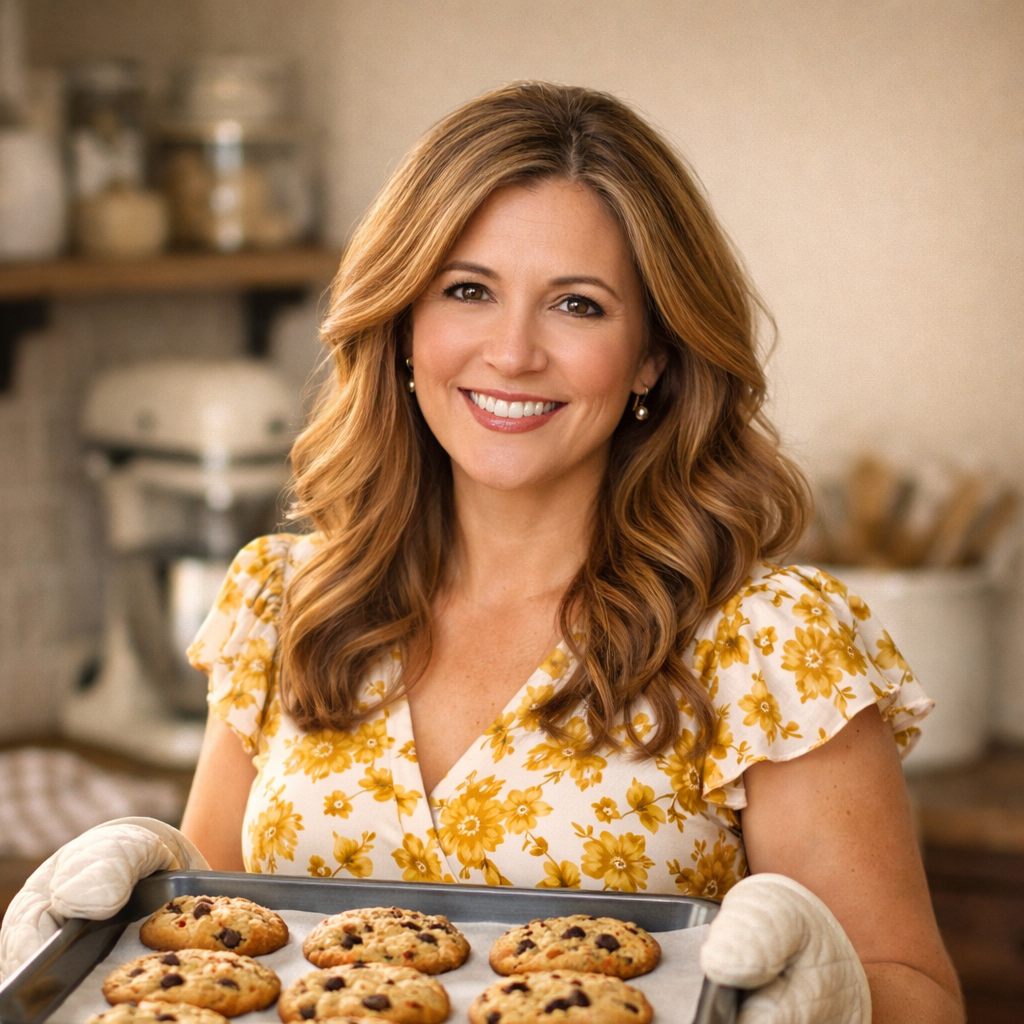
Ana
Ana is a Southern stay-at-home mom of three who bakes the way most people breathe — constantly, naturally, without making a fuss about it. She shows up at new neighbors’ doors with a tin of cookies before the boxes are even unpacked, and she has never once come home from a potluck with anything left in her dish. She Brings Food is where she puts the recipes her family counts on and her neighbors keep asking for.




Homemade Cinnamon Rolls
I have used cinnamon rolls to get teenagers out of bed on Saturday mornings. It works every single time. This is the only method I personally vouch for. The smell reaches the bedrooms before I’ve even finished shaping them, and whatever was previously unmovable about my kids at 9 AM becomes very movable indeed.
The Saturday Morning Smell That Gets Everyone Out of Bed — that’s the actual function of homemade cinnamon rolls at this house. Soft, pillowy, drowning in cream cheese icing that pools into every swirl as it melts. These are the cinnamon rolls that clear every bedroom within ten minutes of going into the oven. They’ve never failed. I keep making them every Saturday for this specific reason, and the side effect is that my family thinks I’m a very devoted baker. Both things are true.
Easy cinnamon rolls are a project, and I want to be honest about that. Yeast dough takes time. Not a lot of active time, but calendar time — the dough rises, you roll, it rises again. An hour of mostly waiting in exchange for cinnamon rolls that taste and feel like something you’d spend significant money on at a bakery. That math works. Overnight cinnamon rolls make it even easier — do the work the night before, sleep, bake in the morning. Best cinnamon rolls come from dough that has had time. This recipe gives it time.
Make these on a Friday night. Wake up Saturday and bake them. Drink your first cup of coffee while the smell fills the house. When the kids appear, pretend you planned nothing. That’s the move, and it works every week.
Why This Recipe Works
The dough is enriched — butter, eggs, and milk make it richer than basic bread dough, which is why cinnamon roll dough is soft and slightly pillowy rather than chewy and bready. Enriched dough requires a longer rise because the fat slows the yeast, but that slower rise develops more flavor. The patience is worth it. Rushing the rise produces doughy, dense rolls that don’t have the cloud-like interior that makes a great cinnamon roll great.
The filling is brown sugar, cinnamon, and softened butter — simple, but the ratio matters. Enough butter to keep the filling moist and spreadable as it bakes into the swirl. Enough brown sugar for depth. Enough cinnamon to smell and taste like something intentional. The cream cheese icing goes on warm, not hot — warm enough to melt slightly into the swirls but not so hot that the icing disappears into a puddle. That application timing is the difference between iced cinnamon rolls and cinnamon rolls that are swimming in something wonderful.
Ingredients
For the Dough
- 3½ cups all-purpose flour (plus more for dusting)
- 2¼ teaspoons active dry yeast (1 packet)
- 3 tablespoons granulated sugar
- 1 teaspoon salt
- ¾ cup whole milk, warmed (about 110°F)
- 2 large eggs, room temperature
- ¼ cup unsalted butter, softened
For the Filling
- ½ cup (1 stick) unsalted butter, softened
- ¾ cup packed brown sugar
- 2 tablespoons cinnamon
For the Cream Cheese Icing
- 4 oz cream cheese, softened
- 1½ cups powdered sugar
- 3–4 tablespoons heavy cream or milk
- 1 teaspoon vanilla extract
- Pinch of salt
How to Make It
1
1 Make and rise the dough
Dissolve yeast in warm milk with a pinch of sugar and let sit 5–8 minutes until foamy — if it doesn’t foam, the yeast is not active. Combine flour, sugar, and salt. Add yeast mixture, eggs, and softened butter. Knead 8–10 minutes until smooth and slightly tacky. Place in a greased bowl, cover, and rise until doubled, about 1–2 hours.
2
2 Roll and fill
Punch down the risen dough and turn onto a floured surface. Roll to a 12×18 inch rectangle. Spread softened butter evenly over the surface. Sprinkle with brown sugar and cinnamon, pressing gently so it adheres. Roll tightly from the long side into a log. Seal the seam by pinching.
3
3 Cut and second rise (or overnight)
Cut the log into 12 even slices with a sharp knife or unflavored dental floss. Place cut-side up in a greased 9×13 pan. Cover and rise 45–60 minutes until puffy and touching. For overnight rolls: refrigerate after placing in pan. Bake in the morning, letting them warm at room temperature 30 minutes first.
4
4 Bake and ice
Preheat oven to 350°F. Bake 25–30 minutes until golden. Let cool 5–10 minutes — they should still be warm. Beat cream cheese, powdered sugar, cream, vanilla, and salt until smooth. Spread generously over warm rolls. Serve immediately.
Things I’ve Learned From Making This Too Many Times to Count
Test the yeast before you start. Warm milk (not hot, not cool — about 110°F) with a pinch of sugar, five minutes, and it should be foamy. If it doesn’t foam, stop and get new yeast. Continuing with dead yeast produces a very disappointing morning. I have made this mistake and I am telling you so you don’t.
Soft butter for the filling. Spreading cold butter over the dough tears it. Room-temperature, spreadable butter creates an even, smooth layer that stays in the swirl as the rolls bake. The butter should spread like cream cheese.
Roll tightly. Loosely rolled cinnamon rolls unfurl in the oven and the filling leaks out rather than staying in the swirl. Roll as tightly as you can while still keeping the shape. The tighter the roll, the more filling stays in each swirl when you cut it.
Use dental floss to cut. A sharp knife works but compresses the rolls slightly. Unflavored dental floss slipped under the log, crossed on top, and pulled cuts clean, perfectly round slices without any compression. If you’ve never tried it, try it once and you won’t go back.
Don’t ice them too hot. Icing over very hot rolls melts completely and pools at the bottom of the pan. Let the rolls cool 5–10 minutes first. Warm enough that the icing melts slightly into the swirls — not so hot that it disappears entirely. Pull it early — it’s still cooking even out of the oven, honey.
The overnight version is easier and better. Make Friday night. Refrigerate in the pan. Saturday morning, let them come to temperature for 30 minutes, then bake. The slow cold rise develops more flavor in the dough. Better rolls and no Saturday morning work. This is the version I use for every holiday morning.
What to Serve With Homemade Cinnamon Rolls
Serve alongside breakfast casserole, banana muffins, and honey butter biscuits for a full morning spread. Alongside a pot of coffee and freshly squeezed orange juice, cinnamon rolls are a complete and deliberately indulgent breakfast that requires no further justification.
For holiday mornings, these are my Christmas morning alternative to the breakfast casserole — sweet households get cinnamon rolls, savory households get the egg casserole. I alternate based on who is staying with us that year. Both are good. The cinnamon rolls get more enthusiasm before coffee.
Variations Worth Trying
Brown butter cinnamon rolls: Brown the filling butter before letting it cool and spread. The nutty, caramelized butter adds a depth to the filling that takes an already excellent recipe somewhere remarkable.
With maple icing: Replace the cream cheese icing with a maple glaze — 1 cup powdered sugar, 2 tablespoons maple syrup, 1–2 tablespoons cream. The maple note against the cinnamon is exceptional.
Apple cinnamon rolls: Add ½ cup finely diced apple to the cinnamon sugar filling before rolling. The apple softens into the swirl during baking and adds fresh sweetness alongside the caramelized cinnamon.
With cardamom: Add 1 teaspoon cardamom to the cinnamon in the filling. The cardamom adds a floral, slightly spicy note that elevates the filling considerably. Use what you’ve got — this recipe forgives.
Storage and Reheating
Store iced rolls covered at room temperature for up to 2 days. Refrigerate for up to 5 days. Reheat individual rolls in the microwave for 20–30 seconds, or in a 300°F oven for 8–10 minutes. Add a small drizzle of fresh icing after reheating to refresh them.
Freeze baked un-iced rolls for up to 2 months. Thaw at room temperature overnight and warm at 300°F for 10 minutes. Add fresh icing after warming. They come back beautifully and taste very close to fresh-baked.
FAQ
Why didn’t my cinnamon rolls rise?
Almost certainly the yeast. Either the milk was too hot (kills yeast) or too cold (doesn’t activate it), or the yeast was old. Test at 110°F, confirm it foams before proceeding, and check the expiration date on your yeast. Yeast that’s been open and sitting in a warm pantry for months may be dead regardless of the date printed on the packet.
Can I make cinnamon rolls without a stand mixer?
Yes — knead by hand for 10–12 minutes instead of the 8 minutes with a mixer. The dough is ready when it passes the windowpane test — stretch a small piece and it should thin out translucent without tearing. It takes longer by hand but produces the same result.
How do I make sure the filling doesn’t all leak out?
Roll the dough tightly, seal the seam well by pinching and pressing, and make sure your butter is softened but not melted when you spread it. Melted butter runs off the dough during rolling. Softened butter stays in place. The tighter the roll and the firmer the butter, the more filling stays where it belongs.

Ana
Ana is a Southern stay-at-home mom of three who bakes the way most people breathe — constantly, naturally, without making a fuss about it. She shows up at new neighbors’ doors with a tin of cookies before the boxes are even unpacked, and she has never once come home from a potluck with anything left in her dish. She Brings Food is where she puts the recipes her family counts on and her neighbors keep asking for.