


Ana
Ana is a Southern stay-at-home mom of three who bakes the way most people breathe — constantly, naturally, without making a fuss about it. She shows up at new neighbors’ doors with a tin of cookies before the boxes are even unpacked, and she has never once come home from a potluck with anything left in her dish. She Brings Food is where she puts the recipes her family counts on and her neighbors keep asking for.




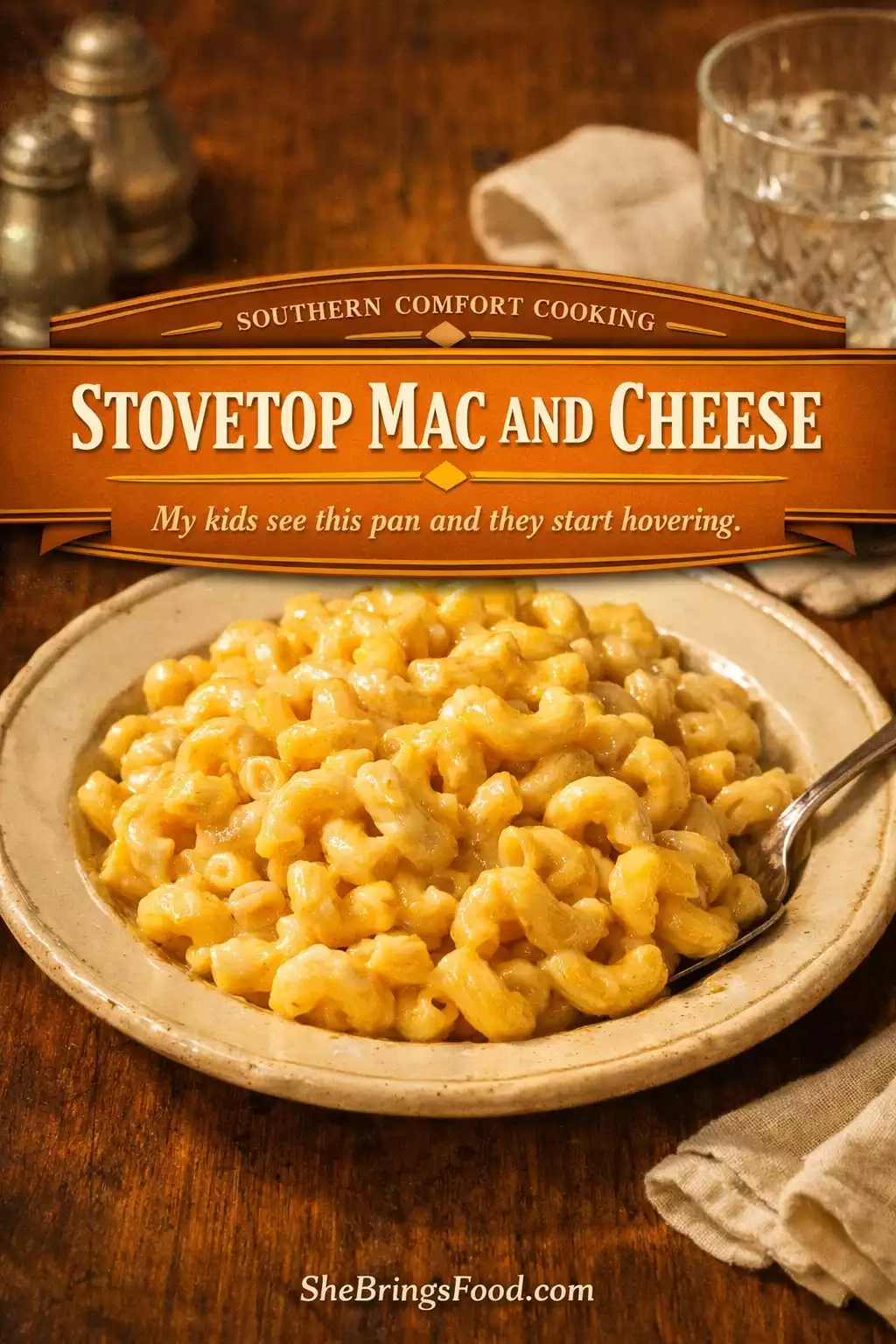
Stovetop Mac and Cheese
My kids have no frame of reference for boxed mac and cheese. I consider this one of my better parenting wins — not because I’m keeping anything from them, but because they have only ever known the real thing and they will spend their lives knowing the difference. That seems like a gift worth giving.
From scratch in twenty minutes. That’s the promise of this stovetop mac and cheese, and it delivers completely. One pot, a real cheese sauce made with ingredients you can pronounce, and the kind of result that makes the box look like what it is — a reasonable approximation of something much better. My kids have never once asked for the box kind. That’s the feedback loop I’m in and I’m staying.
Homemade mac and cheese doesn’t need an hour and a casserole dish. Stovetop mac and cheese is the weeknight version — done in the time it takes to cook the pasta, using a simple cheese sauce that comes together in minutes. Creamy mac and cheese from scratch is not harder than the box version once you’ve made it three times. It’s just better. Categorically, unmistakably, in-every-way better.
This is the recipe I make when the week has been long and someone at my table needs something that feels like home. Twenty minutes, one pot, real cheese. That’s all this requires.
Why This Recipe Works
The cheese sauce is a simple béchamel base — butter, flour, milk — that gets sharp cheddar added off the heat. Off the heat is the key. Cheese added to a sauce that’s still on a high burner can break, turning grainy and greasy. Remove the pan from heat, stir in the cheese, and the sauce comes together smooth and glossy every time. That one step is what separates homemade mac and cheese that tastes restaurant-quality from one that separates into a greasy mess.
Using a combination of cheeses — sharp cheddar for flavor, Gruyère or Monterey Jack for meltability — gives the sauce both depth and the smooth texture you want. Sharp cheddar alone can be slightly grainy. The blend produces a creamier, more consistently smooth sauce. Easy mac and cheese made right is a completely different thing than the box, and this combination of method and ingredients is why.
Ingredients
For the Mac and Cheese
- 1 lb elbow macaroni or cavatappi
- 3 tablespoons unsalted butter
- 3 tablespoons all-purpose flour
- 2½ cups whole milk, warmed
- ½ cup heavy cream
- 2 cups sharp cheddar, freshly grated
- 1 cup Gruyère or Monterey Jack, freshly grated
- 1 teaspoon dry mustard powder
- ½ teaspoon garlic powder
- Salt and white or black pepper to taste
- Pinch of cayenne
How to Make It
1
1 Cook the pasta
Cook macaroni in heavily salted boiling water until just al dente — slightly underdone, since it’ll continue cooking in the sauce. Reserve ½ cup of pasta water before draining. Drain and set aside.
2
2 Make the cheese sauce
In the same pot, melt butter over medium heat. Add flour and stir constantly for 1–2 minutes to cook out the raw flour taste. Slowly whisk in warm milk and cream, continuing to whisk until smooth. Cook 3–4 minutes, stirring, until thickened. Add dry mustard, garlic powder, and cayenne.
3
3 Add the cheese off heat
Remove the pot from heat completely. Add grated cheeses in two additions, stirring after each until fully melted and smooth. Don’t return to the burner — the residual heat is enough. Adding cheese off heat prevents the sauce from breaking. Season with salt and pepper.
4
4 Combine and serve
Add the cooked pasta to the cheese sauce and stir to coat everything evenly. If the sauce is thicker than you want, add a splash of the reserved pasta water to loosen it. Serve immediately — stovetop mac and cheese is best right out of the pot while the sauce is at its creamiest.
Things I’ve Learned From Making This Too Many Times to Count
Grate your own cheese. Pre-shredded cheese is coated with anti-caking agents that make it resist melting smoothly. Hand-grated cheese melts cleanly into a smooth sauce. For stovetop mac and cheese where the sauce is everything, this distinction matters completely. Don’t you dare skip this.
Add cheese off heat. This is the step that makes or breaks the sauce. High heat causes the cheese proteins to tighten and expel fat, resulting in a greasy, grainy sauce. Remove the pot from the burner before adding cheese — every time, without exception.
Undercook the pasta slightly. Al dente pasta finishes cooking as it sits in the hot cheese sauce. If you cook it to fully done before adding sauce, you end up with overcooked pasta that doesn’t hold its shape. Pull the pasta a minute early.
Warm the milk. Cold milk added to a hot roux can cause lumps and an uneven sauce. Warm it in the microwave for 90 seconds before adding. The sauce comes together much more smoothly with warm liquid.
Reserve pasta water. If the sauce tightens up after adding the pasta, a splash of starchy pasta water loosens it back to the right consistency without diluting the flavor. Always save a cup before draining.
Season generously. Cheese sauce needs more salt than you expect. Taste before and after adding the pasta — pasta absorbs salt from the sauce and the seasoning can drop. My kids would put this on their school lunch every single day. It has to be right every single time.
What to Serve With Stovetop Mac and Cheese
Serve alongside baked mac and cheese for a table that takes pasta seriously, or serve as the main event with a simple green salad. It belongs next to mashed potatoes at holiday tables where carb-heavy sides are celebrated, not apologized for. Alongside fried chicken, pulled pork, or any barbecue, this mac and cheese holds its own against anything on the plate.
For weeknights, serve as the main dish with steamed broccoli or a simple salad. Add lobster or crab for a special occasion upgrade. The base recipe supports endless additions — serve alongside cornbread for a full Southern supper that takes twenty-five minutes start to finish.
Variations Worth Trying
With smoked gouda: Replace the Gruyère with smoked gouda for a deeply smoky, slightly sweet sauce. Excellent alongside pulled pork or ribs. One of the better variations I’ve made.
With truffle: Add ½ teaspoon truffle salt or a drizzle of truffle oil at the end. Elevated without being fussy — the kind of thing that makes weeknight mac and cheese feel like a different dish entirely.
Mac and cheese with bacon: Fold in 4 strips of crumbled crispy bacon at the end. The smokiness and crunch in a creamy cheese sauce is a combination that needs no further explanation.
With hot sauce: Stir in 1–2 tablespoons of your preferred hot sauce into the cheese sauce before adding pasta. Crystal or Frank’s works well. Adds heat and acid without overwhelming the cheese. Make it your own, sugar.
Storage and Reheating
Store covered in the refrigerator for up to 4 days. Reheat in a saucepan over low heat with a generous splash of milk, stirring frequently until warm and creamy. Microwave reheating works at 70% power with a splash of milk, stirring every minute.
Stovetop mac and cheese thickens considerably when cold. Always add liquid when reheating — more than you think you need. The sauce will loosen back up as it warms. The flavor holds well through refrigeration and the dish reheats as good as the first day.
FAQ
Why is my mac and cheese grainy?
Grainy cheese sauce is caused by adding cheese to a sauce that’s too hot, or by using pre-shredded cheese with anti-caking coatings. Remove the pot from heat before adding cheese, and grate your own. Both factors together produce a consistently smooth sauce without graininess.
What’s the best cheese for mac and cheese?
Sharp cheddar for flavor, combined with a good-melting cheese like Gruyère, Monterey Jack, or fontina for texture. The blend gives you both the distinctive sharp flavor and the smooth, creamy melt that makes the sauce worth eating. Avoid pre-shredded versions of any cheese for the smoothest result.
How do I keep mac and cheese from getting dry?
Make sure the sauce is slightly thinner than you want when you add the pasta — the pasta absorbs sauce as it sits. If reheating, always add milk or cream and stir over low heat. Undercooking the pasta before adding to the sauce also helps, as fully cooked pasta absorbs more sauce and leaves less for the overall dish.

Ana
Ana is a Southern stay-at-home mom of three who bakes the way most people breathe — constantly, naturally, without making a fuss about it. She shows up at new neighbors’ doors with a tin of cookies before the boxes are even unpacked, and she has never once come home from a potluck with anything left in her dish. She Brings Food is where she puts the recipes her family counts on and her neighbors keep asking for.