


Ana
Ana is a Southern stay-at-home mom of three who bakes the way most people breathe — constantly, naturally, without making a fuss about it. She shows up at new neighbors’ doors with a tin of cookies before the boxes are even unpacked, and she has never once come home from a potluck with anything left in her dish. She Brings Food is where she puts the recipes her family counts on and her neighbors keep asking for.




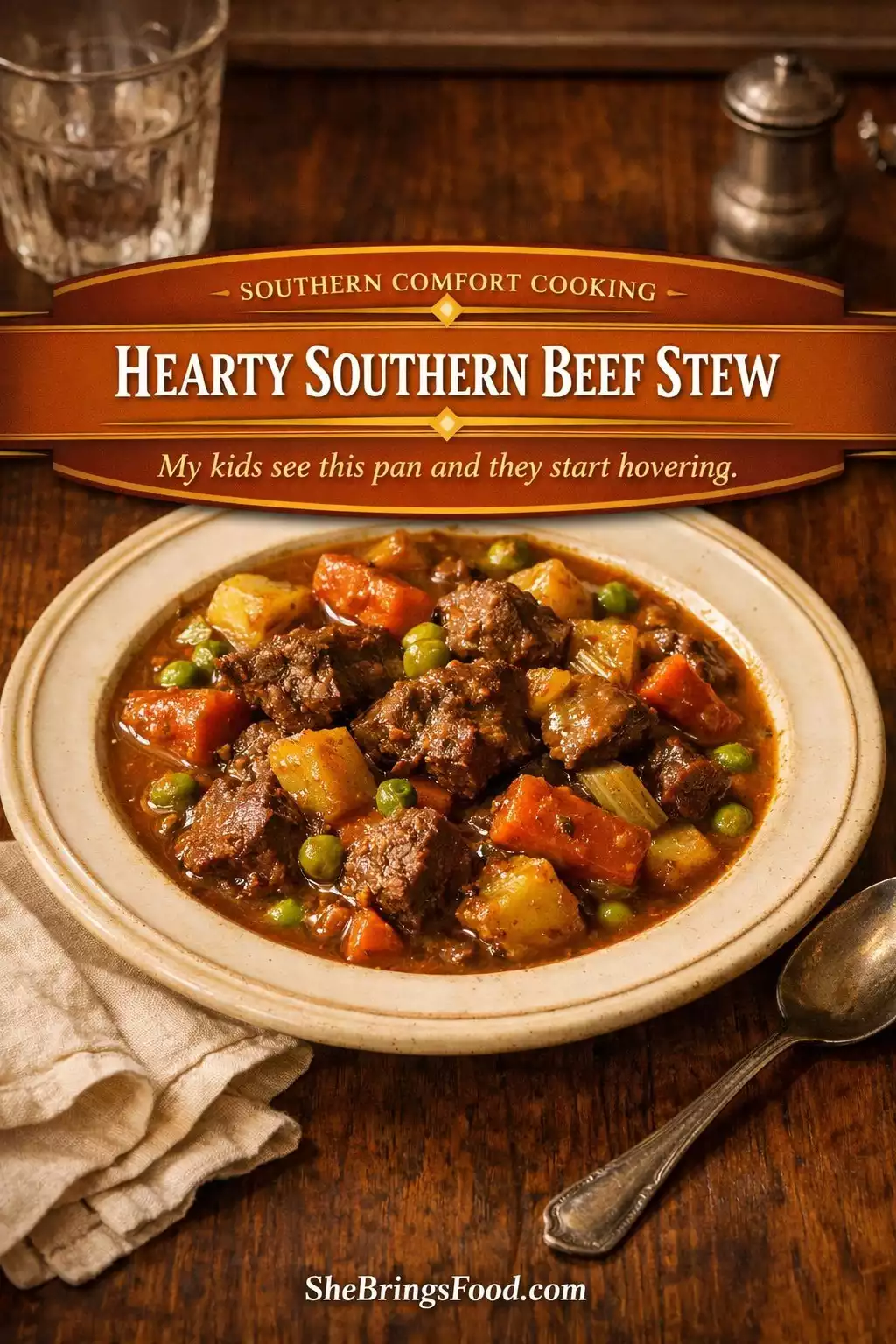
Hearty Southern Beef Stew
The first cold snap of the year is my signal. Time to make the stew. My family starts asking before I announce it because they know what cold weather means at this house. Hearty Southern Beef Stew is the fall dinner I’ve been making every October for six years, and my family has come to expect it the moment the temperature drops.
Thick rich broth, fork-tender beef, root vegetables. The dinner I start making the first week the weather turns cool. It takes a Sunday afternoon and fills the house in the way that October is supposed to smell inside a Southern kitchen.
This isn’t a quick weeknight dinner. It’s a weekend dinner that pays off in deeply flavored, stick-to-your-bones stew that tastes even better on day two. Plan for an afternoon. The result is worth the time.
I’ve made this for enough cold weeks to know what works and what doesn’t. This works every time the leaves turn.
Why This Recipe Works
Searing the beef in batches before adding it to the stew creates the browned crust that defines the flavor of a great beef stew. Batch searing is crucial — overcrowded beef steams instead of searing. Steam gives you gray, bland beef. Proper searing gives you deeply browned, caramelized beef that flavors the entire pot.
Flour-dusted beef thickens the stew from within as it cooks, rather than requiring a separate thickener at the end. Tossing the beef in seasoned flour before searing is a technique that builds thickening power into the beef itself. The result is a naturally thick, velvety stew rather than one that’s been thickened with a cornstarch slurry at the last minute.
Red wine deglazes the pan after searing and adds acidity and depth to the broth. The alcohol cooks off; the flavor complexity stays. It’s the step that takes this from a good stew to an exceptional one.
Ingredients
Beef Stew
- 2½ lbs beef chuck, cut into 1½-inch pieces
- ¼ cup all-purpose flour
- 1½ tsp fine salt
- 1 tsp black pepper
- 3 tbsp olive oil
- 1 large onion, diced
- 4 cloves garlic, minced
- 2 tbsp tomato paste
- 1 cup red wine (or beef broth)
- 3 cups beef broth
- 2 bay leaves
- 1 tsp fresh thyme (or ½ tsp dried)
- 3 large carrots, cut in chunks
- 3 large potatoes, cut in chunks
- 2 stalks celery, sliced
- 1 cup frozen peas (added at end)
- 2 tsp Worcestershire sauce
How to Make It
1
1 Sear the Beef
Toss beef with flour, salt, and pepper. Heat oil in a large Dutch oven over high heat. Sear beef in batches — don’t crowd the pot — until deeply browned on all sides, about 3 minutes per batch. Remove and set aside. This is the step. Don’t rush the searing and don’t overcrowd. The crust is the flavor.
2
2 Build the Base
In the same pot, sauté onion until softened, 4 minutes. Add garlic and tomato paste, cook 1 minute. Pour in wine, scraping up all the browned bits from the bottom. Those bits are flavor — get all of them.
3
3 Braise
Return beef to the pot. Add broth, bay leaves, thyme, and Worcestershire. Bring to a simmer. Cover and cook over low heat for 1½ hours until beef is just becoming tender.
4
4 Add Vegetables
Add carrots, potatoes, and celery. Continue cooking covered for 45 minutes to 1 hour until vegetables are tender and beef is completely fork-tender. Add peas in the last 5 minutes. Taste and adjust seasoning.
Things I’ve Learned From Making This Too Many Times to Count
Sear in batches, never crowded. Crowded beef steams. Seared beef flavors the whole pot. Use a large Dutch oven and work in two or three batches. It takes 15 minutes. Every minute is worth it.
Scrape the fond. Those browned bits stuck to the bottom after searing are concentrated beef flavor. When you add the wine, scrape every single one into the liquid. That’s the foundation of the stew’s depth.
Low, steady heat for braising. A vigorous boil makes beef tough and stringy. A gentle simmer or low-oven braise makes it silky and tender. If the liquid is bubbling aggressively, turn it down.
Day two is better. Beef stew improves overnight as the flavors meld. Make it Sunday. Eat it Monday. That’s the best version of this stew.
The first cold snap of the year is my signal. Time to make the stew. My family starts asking before I announce it. That’s what a recipe that belongs to a season looks like.
What to Serve With Hearty Southern Beef Stew
Cast Iron Skillet Cornbread is the natural companion for any stew at this table. Flaky Southern Buttermilk Biscuits are equally right for soaking up the rich broth. For the full winter comfort rotation, see Sunday Pot Roast and Creamy White Chicken Chili.
Variations Worth Trying
Slow Cooker Version: Sear beef on the stove, transfer to slow cooker with all ingredients. Cook on low 8 to 10 hours. Add vegetables last 2 hours on low.
Guinness Stew: Replace wine and half the broth with Guinness stout. Deeply rich, slightly bitter, magnificent.
With Mushrooms: Add 8 oz sliced mushrooms with the onions. The mushrooms disappear into the stew but add remarkable depth.
Instant Pot Version: Sear using the sauté function. Add all ingredients. Pressure cook on high 35 minutes. Natural release 15 minutes. This recipe forgives. Lord knows I’ve tested that.
Storage and Reheating
Refrigerate covered for up to 4 days. Skim solidified fat from the surface before reheating. Reheat gently on stovetop over medium-low heat, adding a splash of broth if needed. Freeze for up to 3 months. Thaw overnight in refrigerator. The stew is significantly better on day two than day one.
FAQ
Why is my beef stew tough?
Usually insufficient cooking time or too-high heat during braising. Chuck roast needs at least 2 hours of gentle simmering to become tender. If it’s still tough at the 2-hour mark, keep going. It will get there. A too-high boil also makes beef tough even with sufficient time — keep the heat at a gentle simmer throughout.
Why is my stew broth thin?
The flour-dusted beef should naturally thicken the broth. If it’s still thin after cooking, mix 1 tbsp cornstarch with 2 tbsp cold water and stir into the simmering stew. Or simply simmer uncovered for 15 minutes to reduce and concentrate. Toss the beef with the full amount of flour before searing and it should thicken properly.
Can I use a different cut of beef?
Chuck is the best choice for stew because of its fat and connective tissue content. Brisket works. Avoid lean cuts like sirloin or round — they don’t have enough fat to braise well and become dry and stringy with long cooking.

Ana
Ana is a Southern stay-at-home mom of three who bakes the way most people breathe — constantly, naturally, without making a fuss about it. She shows up at new neighbors’ doors with a tin of cookies before the boxes are even unpacked, and she has never once come home from a potluck with anything left in her dish. She Brings Food is where she puts the recipes her family counts on and her neighbors keep asking for.