


Ana
Ana is a Southern stay-at-home mom of three who bakes the way most people breathe — constantly, naturally, without making a fuss about it. She shows up at new neighbors’ doors with a tin of cookies before the boxes are even unpacked, and she has never once come home from a potluck with anything left in her dish. She Brings Food is where she puts the recipes her family counts on and her neighbors keep asking for.




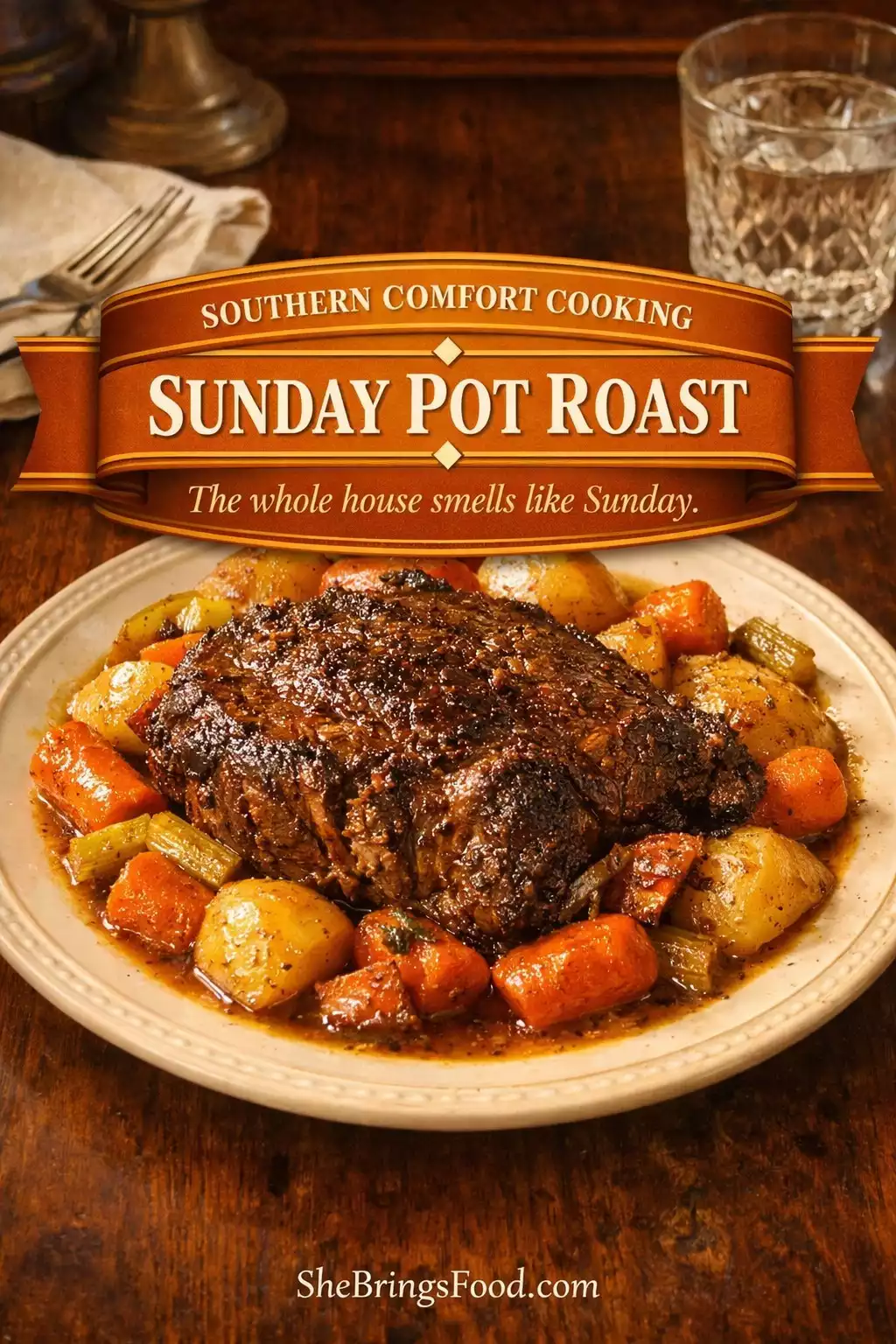
Sunday Pot Roast
I put this in before church and it’s ready when we get home. The whole house smells like a Sunday is supposed to smell — that warm, deep, slow-cooked beef and vegetable smell that means the week is done and the family is about to sit down together. Sunday Pot Roast is what a Sunday afternoon is supposed to smell like and what a Sunday dinner table is supposed to look like.
Low and slow, fork-tender, with carrots and potatoes that have been cooking in the same liquid as the beef all day and taste exactly like it. The kind of dinner that fills the house with that smell before anyone sits down, and earns the kind of silence at the table that means everyone is just eating and not talking because the food is that good.
This is one of those recipes where time is the main ingredient. Active prep is 15 minutes. After that, the oven does everything. That’s a Sunday dinner — something good that doesn’t cost you your whole afternoon.
My family has been sitting down to this after church for four years. I don’t see any reason to change that.
Why This Recipe Works
Searing the roast before it goes in the braising liquid develops the Maillard reaction on the exterior — that brown crust that adds layers of flavor to the whole dish as it slow-cooks. A roast that goes into the pot raw produces a paler, less flavorful result. Three minutes per side in a hot pan before braising and the whole dish tastes more intentional.
Braising — cooking the roast partially submerged in liquid in a covered pot at low heat — is the technique that makes tough cuts tender. Chuck roast has a lot of connective tissue. Long, low, moist heat converts that connective tissue into gelatin, which makes the meat fall apart and gives the braising liquid that silky body. High heat makes it tough. Low heat makes it luxurious.
Adding vegetables in the last 90 minutes rather than from the start prevents them from turning to complete mush over 4 hours. Slightly firm vegetables with the tenderness of having cooked in beef broth is the goal, not dissolved vegetables.
Ingredients
Pot Roast
- 3 to 4 lb chuck roast
- 2 tbsp olive oil
- Salt and pepper
- 1 large onion, quartered
- 4 cloves garlic, smashed
- 2 cups beef broth
- 1 cup red wine or additional broth
- 2 tbsp Worcestershire sauce
- 1 tbsp tomato paste
- 2 sprigs fresh thyme or 1 tsp dried
- 2 bay leaves
Vegetables (added last 90 min)
- 4 large carrots, cut in chunks
- 4 large potatoes, quartered
- 2 stalks celery, cut in chunks
How to Make It
1
1 Sear the Roast
Preheat oven to 275°F. Pat the roast completely dry and season generously with salt and pepper on all sides. Heat oil in a Dutch oven over high heat. Sear the roast 3 minutes per side until deeply browned on all sides. Don’t rush this — the brown crust is the flavor foundation of the whole dish.
2
2 Build the Braising Liquid
Remove roast. Sauté onion in the same pot 3 minutes. Add garlic and tomato paste, cook 1 minute. Pour in broth, wine, and Worcestershire, scraping up all the browned bits from the bottom of the pot. Add thyme and bay leaves.
3
3 Braise Low and Slow
Return roast to the pot, nestled into the liquid. The liquid should come halfway up the sides of the roast. Cover tightly and braise in the oven at 275°F for 2½ hours.
4
4 Add Vegetables
After 2½ hours, nestle carrots, potatoes, and celery around the roast. Cover and return to the oven for 1½ more hours until vegetables are tender and the roast is completely fork-tender and pulls apart easily.
5
5 Rest and Serve
Remove roast to a cutting board and rest 10 minutes. Skim fat from braising liquid. Taste the liquid and adjust seasoning — it’s your sauce. Serve the roast with vegetables and the braising liquid spooned over everything.
Things I’ve Learned From Making This Too Many Times to Count
Sear the roast before braising. Every surface. Don’t skip side or end panels. This is where the flavor foundation is built. Five minutes of searing pays back in flavor all day.
Keep the temperature low. 275°F is not a mistake. It’s the temperature that converts connective tissue into tenderness. 325°F is too high and produces a tighter, drier result. Low and slow is literal for this recipe.
Add vegetables in the last 90 minutes. They need 90 minutes to become tender in the braising liquid. They need less than 4 hours unless you want mush. The timing is specific for a reason.
The braising liquid is the sauce. Don’t pour it off. Skim the fat, taste, season, and spoon it generously over everything. It’s been absorbing beef and vegetable flavor for 4 hours. That liquid is the best part of the pan.
The whole house smells like a Sunday is supposed to smell. Put it in before church. Come home. It’s ready. That’s the Sunday pot roast promise.
What to Serve With Sunday Pot Roast
The braising liquid becomes the natural gravy for Creamy Southern Mashed Potatoes. Cast Iron Skillet Cornbread for soaking up the liquid. This is a complete Sunday dinner without any other additions needed. For weeknight variation on the same flavors, see Classic Southern Meatloaf.
Variations Worth Trying
Slow Cooker Version: Sear the roast on the stove first, then transfer to a slow cooker with all the braising ingredients. Cook on low 8 to 10 hours. Add vegetables last 2 hours on low or last hour on high.
Mississippi Pot Roast: Add a packet of au jus gravy mix, a packet of ranch seasoning, a stick of butter, and a jar of pepperoncini peppers to the pot. A different recipe and an exceptional one.
Tomato Braised: Add one (14 oz) can of crushed tomatoes to the braising liquid. Richer, more complex flavor with a slight acidity that brightens the whole dish.
With Mushrooms: Add 8 oz quartered mushrooms in the last 90 minutes with the vegetables. The mushrooms absorb the braising liquid and become deeply flavorful. Use what you’ve got — this recipe has manners, it won’t fuss.
Storage and Reheating
Refrigerate pot roast and vegetables in the braising liquid for up to 4 days. The fat solidifies on top in the refrigerator and can be easily skimmed before reheating. Reheat gently on the stovetop over medium-low heat, or in a 300°F oven covered for 20 minutes. Freeze in the braising liquid for up to 3 months. Thaw overnight in refrigerator.
FAQ
What cut of beef is best for pot roast?
Chuck roast is the classic choice and the best for most home cooks. It has abundant connective tissue and intermuscular fat that convert to tenderness and flavor during long braising. Brisket and bottom round also work but have different textures. Chuck gives you the fork-tender, pull-apart result the recipe is designed for.
Can I skip the wine?
Yes — substitute with additional beef broth. Wine adds acidity and complexity but the roast is excellent without it. Non-alcoholic red wine or grape juice also work if you want the flavor without the alcohol. Use what you have.
How do I know when the pot roast is done?
The roast should pull apart easily when prodded with two forks. If it’s still resisting, it needs more time. Under-braised pot roast is tough and chewy. Over-braised pot roast is a little dry but still good. When in doubt, give it more time.

Ana
Ana is a Southern stay-at-home mom of three who bakes the way most people breathe — constantly, naturally, without making a fuss about it. She shows up at new neighbors’ doors with a tin of cookies before the boxes are even unpacked, and she has never once come home from a potluck with anything left in her dish. She Brings Food is where she puts the recipes her family counts on and her neighbors keep asking for.