

Ana
Ana is a Southern stay-at-home mom of three who bakes the way most people breathe — constantly, naturally, without making a fuss about it. She shows up at new neighbors’ doors with a tin of cookies before the boxes are even unpacked, and she has never once come home from a potluck with anything left in her dish. She Brings Food is where she puts the recipes her family counts on and her neighbors keep asking for.




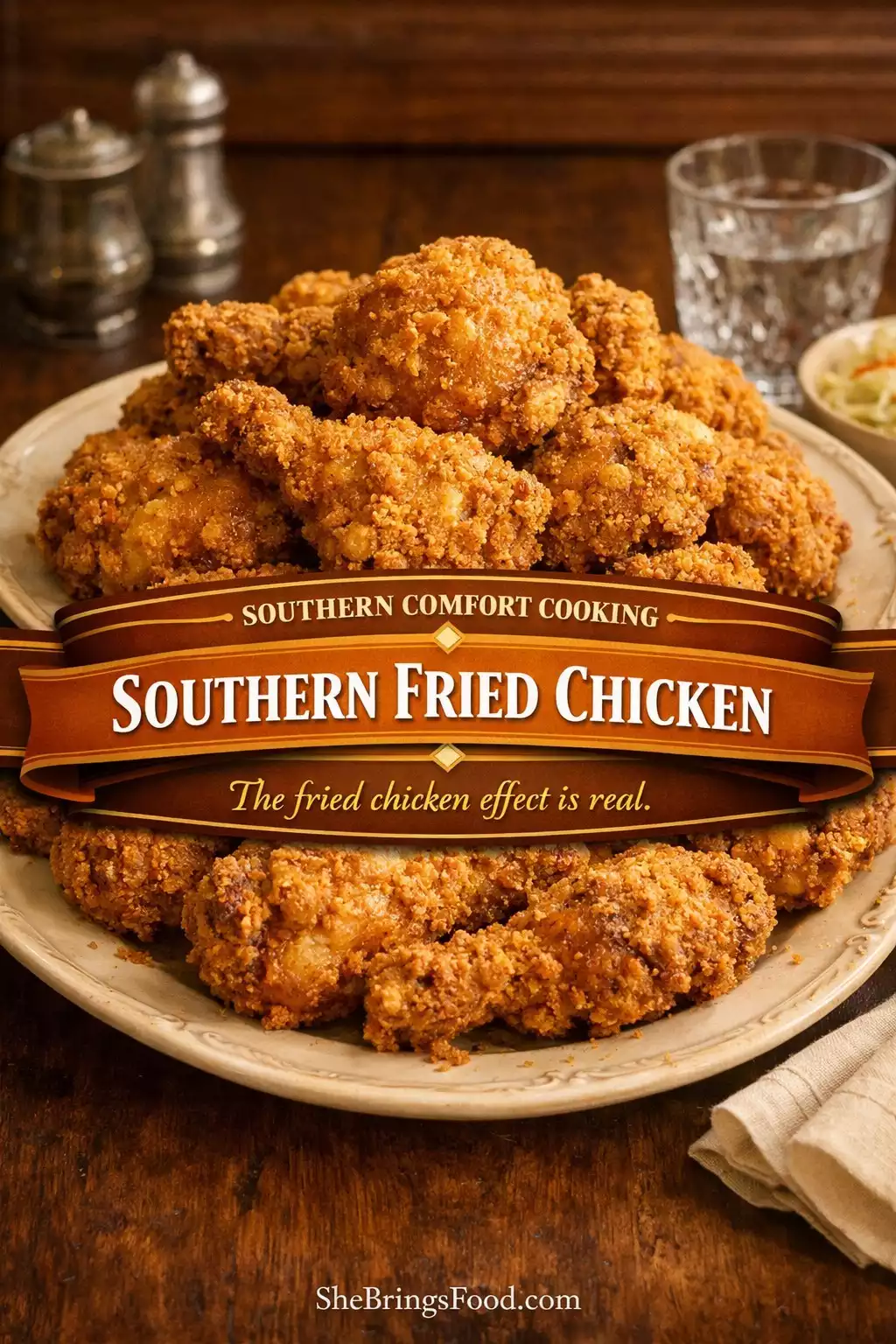
Southern Fried Chicken
Two out of my three kids have chosen this chicken for their birthday dinner every single year. Not a restaurant. Not a special outing. They want to come home, sit at this table, and have Southern Fried Chicken. I take that seriously. That is not a small thing in this house, and I do not take it lightly.
Buttermilk-brined, double-dredged, fried golden. Crispy, crackling exterior that shatters when you bite into it. Juicy inside because the buttermilk brine has done its work. This is Southern fried chicken done exactly the way it should be done, and my family has opinions about what that means.
The process has steps and the steps matter. Brine the chicken. Double-dredge. Fry at the right temperature. Rest on a rack, not paper towels. None of those steps are hard. All of them are necessary if you want the result I’m describing.
Every time I bring this to a family dinner, the room gets a little quieter when the platter comes out. That’s the fried chicken effect. I’ve counted on it for years.
Why This Recipe Works
Buttermilk brine does two things: the acid tenderizes the chicken so it stays juicy even through the heat of frying, and the slight tang it imparts is part of the flavor profile of proper Southern fried chicken. Skip the brine and the chicken is good. Do the brine and the chicken is the kind people request for birthday dinners.
The double-dredge — flour, then egg wash, then flour again — creates a thicker, more substantial crust that stays crisp longer and has more of those craggly bits that are the best part of fried chicken. A single dredge gives you a thin coat. Double dredge gives you a crust.
Oil temperature is the whole science of frying. Too low and the chicken absorbs oil and goes greasy. Too high and the crust browns before the chicken cooks through. 325°F to 350°F is the range. A thermometer is not optional here.
Ingredients
Buttermilk Brine
- 2 cups buttermilk
- 2 tsp fine salt
- 1 tsp garlic powder
- 1 tsp onion powder
- 1 tsp hot sauce (optional)
- 3 to 4 lbs bone-in chicken pieces
Dredge and Fry
- 2 cups all-purpose flour
- 1 tsp fine salt
- 1 tsp black pepper
- 1 tsp garlic powder
- 1 tsp onion powder
- 1 tsp paprika
- ½ tsp cayenne
- 2 large eggs
- ¼ cup buttermilk
- Neutral oil for frying (vegetable or canola), about 2 inches deep
How to Make It
1
1 Brine the Chicken
Whisk together buttermilk, salt, garlic powder, onion powder, and hot sauce. Add chicken pieces, turn to coat, cover, and refrigerate at least 4 hours or overnight. Overnight is better. Bless your heart if you rush this part — the brine is where the juiciness comes from.
2
2 Set Up Dredge Station
In a shallow dish, whisk together flour and all seasonings. In a second dish, whisk eggs with buttermilk. Remove chicken from brine and let excess drip off.
3
3 Double Dredge
Dredge each piece in seasoned flour, pressing to adhere. Dip in egg wash, let excess drip. Dredge in flour again, pressing firmly to create a thick coat. Place on a wire rack and rest 10 minutes before frying. Resting lets the coating adhere so it doesn’t fall off in the oil.
4
4 Fry
Heat oil in a large heavy skillet or Dutch oven to 325°F. Fry chicken in batches, not crowding the pan — crowding drops the oil temperature. Dark meat: 14 to 16 minutes total. White meat: 10 to 12 minutes. Turn once halfway. Internal temperature should reach 165°F.
5
5 Rest on a Rack
Remove to a wire rack set over a sheet pan. Never paper towels — paper towels trap steam and soften the crust. A rack lets air circulate and the crust stays crispy. Rest 5 minutes before serving.
Things I’ve Learned From Making This Too Many Times to Count
Brine overnight. Four hours is the minimum. Overnight is what produces juicy fried chicken that stays juicy even if it sits for a while. Plan for this.
Oil temperature matters. Don’t estimate it. Use a thermometer. 325°F is the right frying temperature for bone-in chicken. The temperature will drop when you add cold chicken — let it come back up between batches.
Don’t crowd the pan. Crowding drops the oil temperature dramatically. Fry in batches with room between pieces. Patient frying gives you crispy chicken. Crowded frying gives you greasy chicken.
Rest on a rack, not paper towels. Paper towels are the enemy of crispy fried chicken. They trap steam. A rack lets air circulate underneath and the crust stays exactly as crispy as it was when it came out of the oil.
My kids have requested this for birthday dinners for four years straight. That’s the endorsement. When a child chooses fried chicken over a restaurant on their birthday, you’ve gotten the recipe right.
What to Serve With Southern Fried Chicken
The classic Southern fried chicken plate: Creamy Southern Mashed Potatoes, Classic Southern Coleslaw, and Cast Iron Skillet Cornbread. For the baked version that’s dramatically easier, see Crispy Baked Chicken Thighs. Serve with Southern Baked Mac and Cheese for the full Southern Sunday dinner spread.
Variations Worth Trying
Spicy Version: Double the cayenne and add 1 tsp red pepper flakes to the flour dredge. Brush the finished chicken with a little hot sauce and honey while still hot. Nashville hot-adjacent.
Air Fryer Version: Brine and double-dredge as written. Spray generously with cooking oil. Air fry at 375°F for 20 to 25 minutes, flipping once. Not identical to pan-fried, but remarkably good for the effort.
Boneless Thighs: Use boneless skinless chicken thighs for faster frying — 8 minutes total. Great for sandwiches.
Herb Crust: Add 2 tbsp dried herbs (thyme, rosemary, sage) to the flour dredge. Fragrant and good. This recipe forgives. Lord knows I’ve tested that.
Storage and Reheating
Store cooled chicken on a wire rack in the refrigerator for up to 3 days. To reheat and restore the crust: bake at 400°F on a rack for 15 to 20 minutes. The oven re-crisps the crust in a way the microwave never can. Don’t microwave fried chicken unless the crust doesn’t matter to you. It matters.
FAQ
What oil is best for frying chicken?
Neutral oil with a high smoke point: vegetable oil, canola oil, or peanut oil. Peanut oil is the traditional Southern choice and gives the cleanest flavor. Vegetable and canola are equally good and more widely available. Don’t use olive oil or butter — both have low smoke points and will burn at frying temperatures.
Why is my fried chicken coating falling off?
Usually the brine wasn’t dried off enough before dredging, or the resting step after dredging was skipped. Pat chicken dry after removing from brine. After double-dredging, rest the coated pieces on a rack for 10 minutes before frying. The coating needs time to hydrate and adhere.
How do I know when the chicken is done?
Thermometer. The only reliable way. Bone-in thighs and drumsticks: 165°F at the thickest point, not touching bone. White meat reaches temperature faster than dark — check both. The crust being golden and the juices running clear are good signs but a thermometer is the certainty.

Ana
Ana is a Southern stay-at-home mom of three who bakes the way most people breathe — constantly, naturally, without making a fuss about it. She shows up at new neighbors’ doors with a tin of cookies before the boxes are even unpacked, and she has never once come home from a potluck with anything left in her dish. She Brings Food is where she puts the recipes her family counts on and her neighbors keep asking for.